

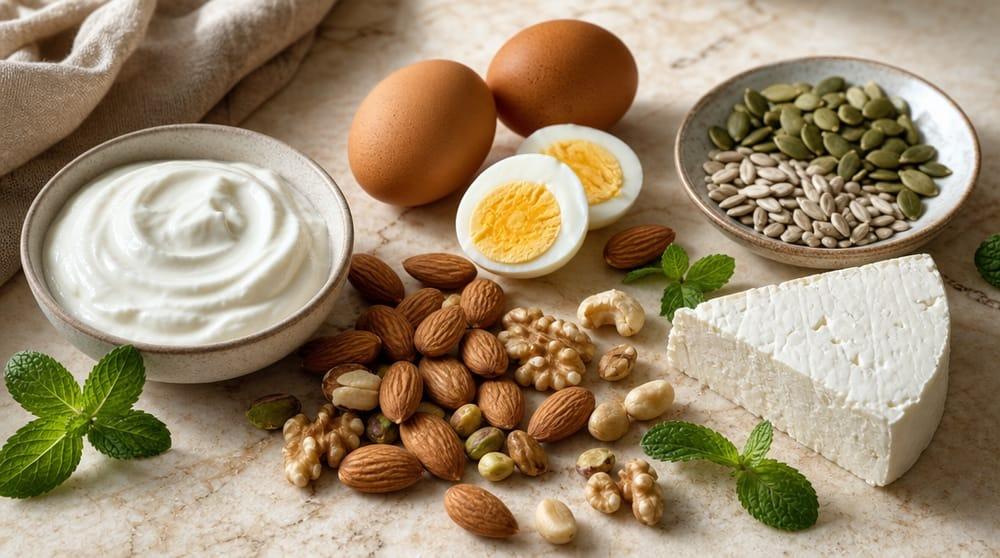
Protein is the single most filling nutrient you can eat. Gram for gram, it quiets hunger hormones, slows how fast your stomach empties, and burns more energy during digestion than either carbohydrate or fat. That is why a protein-rich meal keeps you full for longer and, almost effortlessly, leads you to eat fewer calories over the day without feeling deprived.
This guide explains why protein beats other nutrients at controlling appetite, what the science actually shows, how much you need each day, and the best sources — with practical tips that fit a Saudi kitchen and a special note for anyone following keto, low-carb, or living with diabetes.
What is satiety, and why does it matter for weight?
Appetite control has two parts that work together. The first is satiation — the fullness that builds during a meal and makes you stop eating. The second is satiety — how long you stay full before hunger returns. When both signals are strong, you eat a sensible portion and coast for hours without cravings for snacks or sweets.
The trouble is that many refined, high-carbohydrate foods — white bread, pastries, processed sweets — deliver a quick but short-lived fullness, so hunger returns early and your daily calorie intake climbs. Protein works on both fronts: it helps you feel satisfied on less food and keeps you full afterward. Repeated across every meal, that small difference shows up clearly on the scale and in steadier energy.
Why is protein the most satiating nutrient?
Protein wins on fullness for four complementary physiological reasons — not just one.
1) It tunes your hunger and fullness hormones
Eating protein prompts the gut to release satiety hormones such as GLP-1, PYY, and cholecystokinin (CCK) — signals that tell the brain you have had enough. Meanwhile the hunger hormone ghrelin tends to fall more after protein-rich meals than after carbohydrate-heavy ones. The practical result is less urge to return to food soon. A 2015 review in the American Journal of Clinical Nutrition summarized these mechanisms and their role in losing weight and keeping it off.
2) It costs more energy to digest (the thermic effect of food)
Every nutrient costs the body some energy to digest and process — the "thermic effect of food." For protein this cost is by far the highest: roughly 20–30% of its calories are spent processing it, versus 5–10% for carbohydrate and just 0–3% for fat. In plain terms, a real slice of protein's calories is "paid" toward digesting it, so less is left to store — and your body warms slightly after the meal.
3) It slows stomach emptying and steadies blood sugar
Protein lingers in the stomach and slows the passage of food into the intestine, stretching out the feeling of fullness. It also does not spike blood sugar the way refined carbohydrates do; and when you pair protein with a carbohydrate, it blunts the sharp rise and crash in blood sugar — a major trigger of hunger pangs and sugar cravings.
4) The "protein leverage" effect: you stay hungry until protein is met
The Protein Leverage hypothesis proposes that the body has a daily protein target it seeks to reach, and that you may keep eating until you hit it. If your diet is low in protein and high in refined carbohydrate, you may overshoot on total calories simply because your body is "hunting" for the missing protein. Giving every meal an adequate protein serving satisfies that demand early, so surplus calories naturally fall.
What does the science say?
The evidence that protein drives fullness is among the most solid in nutrition. One of the clearest trials is the Weigle et al. study in the American Journal of Clinical Nutrition (2005): when protein was raised from 15% to 30% of calories at a constant weight, satiety rose markedly. When participants were then allowed to eat freely on the high-protein diet, their daily intake fell spontaneously by about 441 calories, and they lost on average 4.9 kg of body weight and 3.7 kg of fat over 12 weeks — with no deliberate calorie restriction.
A well-known critical review by Halton and Hu in the Journal of the American College of Nutrition (2004) likewise concluded that higher-protein diets increase thermogenesis and satiety and support weight loss. The 2015 review by Leidy and colleagues expanded on how protein lowers appetite through gut hormones and preserves muscle mass during dieting. In short, the scientific message is consistent across decades of research.
How much protein do you need each day?
The minimum recommended to avoid deficiency is 0.8 grams per kilogram of body weight per day (about 56 g for a 70 kg adult). But that figure prevents deficiency; it is not the target for optimal appetite control. To improve satiety, manage weight, and preserve muscle, research supports higher amounts — often in the range of 1.2 to 1.6 grams per kilogram per day, depending on activity, age, and goal.
- Older adults: The PROT-AGE group recommends about 1.0–1.2 g/kg per day (higher with illness) to counter age-related muscle loss.
- Athletes and strength trainers: Usually need the upper end of the range to support muscle building and recovery.
- Those losing weight: Higher protein protects muscle during a calorie deficit and curbs hunger, making the plan easier to stick to.
Just as important is spreading protein across the day rather than cramming it into one meal. Evidence suggests a serving of about 20–30 grams of quality protein per meal efficiently stimulates muscle protein synthesis and delivers steady fullness. And start your day with enough protein: a protein-rich breakfast reduces hunger and mindless snacking later on.
The best sources of protein
Vary animal and plant sources to get a complete range of amino acids along with fiber and healthy fats:
- Eggs: About 6 g of protein each, quick to prepare and highly satiating — an ideal breakfast choice.
- High-protein dairy: Greek yogurt and soft/cottage-style cheeses (labneh, cheese) give protein and calcium with few carbs.
- Chicken, lean meats, and fish: Concentrated, high-quality sources; oily fish adds omega-3.
- Nuts and seeds: Almonds, walnuts, pumpkin and chia seeds combine protein with healthy fats and fiber.
- Legumes: Lentils, chickpeas, and beans are good plant sources (keto followers should watch their carb content).
- Almond flour: A low-carb alternative to wheat flour — higher in protein, healthy fats, and fiber, and the base for more satisfying baked goods.
Protein and preserving muscle during weight loss
When you lose weight, fat is not the only thing that goes; part of the loss can come from muscle if protein is too low. That matters for two reasons: muscle is metabolically active tissue that raises your resting burn rate, and losing it slows metabolism and makes weight easier to regain once the diet ends. So raising protein during weight loss is a double investment: it protects your muscle and keeps you full, making the calorie deficit easier to sustain.
This becomes even more important with age, as the body gradually loses muscle (known as sarcopenia). Spreading enough protein across meals, alongside physical activity that includes resistance training, helps preserve strength and mobility in later years. Protein here is not just for athletes — it is a pillar of general health and of staying independent over time.
Protein and taming sugar cravings
Many sugar cravings are not true hunger but the result of a sharp blood-sugar crash after a meal heavy in refined carbohydrate. When your meal contains enough protein, the rise in blood sugar afterward is gentler and returns to baseline more slowly, so those crashes that send you hunting for a quick sweet become less frequent. Over time, this pattern helps break the "sugar begets more sugar" cycle and makes your food choices calmer and more in control.
Practical tips to boost fullness with protein
- Start every meal with protein: Eat your protein source before the carbs to switch on fullness signals early.
- Make breakfast protein-forward: Eggs or Greek yogurt instead of pastries, to reduce hunger all day.
- Always pair carbs with protein or healthy fat: This blunts the blood-sugar spike and extends fullness.
- Keep ready protein snacks on hand: A handful of almonds, a boiled egg, or a piece of cheese instead of carb-heavy chips.
- Don't forget fiber and water: They work with protein to enhance fullness and slow digestion.
- Distribute your servings: 20–30 g per meal beats loading all your protein into one sitting.
Protein, blood sugar, and keto: an angle that matters in Saudi Arabia
Obesity and high blood sugar are common health challenges in the region; recent studies put adult obesity in Saudi Arabia at around 21–24%. This is where protein shines: when it replaces part of the refined carbohydrate in a meal, blood sugar swings less sharply, easing the hunger pangs and sugar cravings that drive overeating.
For those following keto and low-carb, protein plus healthy fats forms the backbone of a satisfying meal — as long as protein stays within the plan's limits. And for anyone living with diabetes, serving protein alongside carbohydrate helps flatten the after-meal glucose curve. Learn more about counting carbs in our article on net carbs, and about feeding your body well in our gut-health guide.
Who should be careful?
Protein is safe and beneficial for most people, but some situations call for caution and professional advice:
- People with chronic kidney disease: May need to adjust protein intake under medical supervision.
- Specific medical conditions or medications: Coordinate with your doctor or dietitian before raising protein sharply.
- Everyone: Vary your sources, drink enough water, and don't neglect vegetables, fiber, and healthy fats.
This information is general education and is not a substitute for medical advice. If you manage a condition such as diabetes or kidney disease, or take medication regularly, consult your doctor or dietitian before making major changes to your diet.
Protein and Bakery 8 products
At Bakery 8 (مخبز ثمانية) we build our products on a "healthy and delicious" foundation: almond-flour, sugar-free baked goods that deliver more protein, healthy fats, and fiber, with fewer net carbs than their white-flour counterparts — meaning longer fullness and a gentler effect on blood sugar. Try our samoli and cloud bread as a satisfying base for breakfast instead of white bread, and add a protein source such as eggs, cheese, or labneh on top.
For between-meal crunch, our keto granola and crackers offer a mix of protein- and healthy-fat-rich nuts and seeds — a filling alternative to high-carb snacks. The idea is simple: make every bite work for your fullness, not against it.
Frequently asked questions
Does protein really keep you fuller than carbs and fat?
Yes. Protein is the most satiating nutrient per calorie: it raises fullness hormones, slows stomach emptying, and costs more energy to digest. That is why a protein-rich meal keeps you full longer than a calorie-matched meal built on refined carbohydrate.
How many grams of protein do I need daily?
The minimum to prevent deficiency is 0.8 g per kilogram of body weight. For better satiety, weight management, and muscle preservation, research supports roughly 1.2–1.6 g/kg per day, spread across meals at about 20–30 g per meal.
Can protein help me lose weight without counting calories?
Often yes, indirectly. More protein increases fullness and reduces hunger, so calorie intake falls on its own — studies have shown drops of around 441 calories a day — while muscle is protected as weight comes off. Overall diet quality and activity still matter.
What are the best protein sources for breakfast?
Eggs, Greek yogurt, and cottage-style cheese are excellent because they are high in protein and quick to prepare. Make them the base of breakfast instead of refined pastries to reduce hunger and mindless snacking for the rest of the day.
Does eating a lot of protein harm the kidneys?
In healthy people, current evidence does not support the idea that moderately high protein harms healthy kidneys. But those with chronic kidney disease may need to adjust their intake under medical supervision. Consult a professional if you have a health condition.
I follow keto — how much protein suits me?
On keto, a moderate-to-high protein intake with healthy fats and very low carbs is preferred. Adjust the amount to stay within your targets, spread it across meals, and use sugar-free almond-flour products as a satisfying base.
The bottom line
Protein is your strongest natural ally for appetite control: it extends fullness, calms hunger hormones, protects muscle, and softens the blood-sugar response. Start your meals with it, spread it through the day, and pair it with fiber and healthy fats. And when you choose your bread and snacks, favor those that combine protein, healthy fats, and low net carbs — exactly how we make them at Bakery 8: healthy and delicious, and keeping you full for longer.
References
- Weigle DS, et al. A high-protein diet induces sustained reductions in appetite, ad libitum caloric intake, and body weight. Am J Clin Nutr. 2005;82(1):41–48. PubMed
- Leidy HJ, et al. The role of protein in weight loss and maintenance. Am J Clin Nutr. 2015;101(6):1320S–1329S. PubMed
- Halton TL, Hu FB. The effects of high protein diets on thermogenesis, satiety and weight loss: a critical review. J Am Coll Nutr. 2004;23(5):373–385. PubMed
- Moon J, Koh G. Clinical Evidence and Mechanisms of High-Protein Diet-Induced Weight Loss. J Obes Metab Syndr. 2020;29(3):166–173. PMC
- Bauer J, et al. (PROT-AGE Study Group). Evidence-based recommendations for optimal dietary protein intake in older people. J Am Med Dir Assoc. 2013;14(8):542–559. JAMDA
- Raubenheimer D, Simpson SJ. Protein Leverage: Theoretical Foundations and Ten Points of Clarification. Obesity. 2019;27(8):1225–1238. Wiley
- Institute of Medicine. Dietary Reference Intakes for Energy, Carbohydrate, Fiber, Fat, Fatty Acids, Cholesterol, Protein, and Amino Acids. National Academies Press; 2005. NAP
- Harvard T.H. Chan School of Public Health. The Nutrition Source: Protein. Harvard
Related keywords: protein and satiety, foods that keep you full, how to control appetite, protein for weight loss, thermic effect of food, high-protein breakfast, protein sources, keto and protein.