

GLP-1 medications — the drugs people call "weight-loss injections" — do not burn fat and do not speed up your metabolism. They imitate a hormone your own gut already releases after every meal: they slow how fast your stomach empties and turn down the hunger signal in your brain, so you eat less without fighting yourself every day. That explains why they work, and it also explains the biggest misunderstanding about them: because the drug changes how much you eat rather than what you eat, the quality of your food during treatment is what decides the shape of the weight you lose — and how much of it stays after you stop.
This article walks through the numbers as they actually are: what the drug does, how much weight came off in the trials, what body-composition scans really say about "muscle loss", what happened to participants a year after they stopped, the benefits and the side effects with their confidence intervals attached, and what changed in 2026. In every section we separate what is established from what is only suggested.
What are GLP-1 medications, and why did they spread so fast?
The formal name is "glucagon-like peptide-1 receptor agonists". GLP-1 itself is not a foreign chemical — it is a hormone released by cells in your intestine after you eat. The medication is essentially a modified version of it that survives in the body for days instead of minutes.
Cleveland Clinic describes three main actions: they prompt the pancreas to release insulin, they slow stomach emptying so glucose enters the bloodstream more gradually, and they increase satiety by acting on brain regions that control hunger, so you take in less food.
Notice what is missing from that list
Nowhere in those three actions is there anything called "fat burning" or "raising your metabolic rate". The drug lowers the input; it does not raise the output. That is not an academic detail — it is the direct reason your result depends on what you put into the few meals you now eat.
What were they originally approved for?
This class was approved first for type 2 diabetes, and later some molecules were approved at higher doses for obesity, or for overweight accompanied by a weight-related condition. In other words, the "weight-loss injection" and the "diabetes injection" are often the same substance at a different dose under a different name — reason enough never to treat the prescription as something you can copy from someone else.
Why are there so many names for so few molecules?
Most of the confusion comes from multiple brand names for a single active ingredient. The useful simplification is to remember the molecule, not the box:
- Semaglutide: one substance marketed under different names depending on the indication and the route — a weekly injection for diabetes, a higher-dose weekly injection for obesity, and a daily oral tablet. It is also the most-used option in the Saudi survey we come to below.
- Tirzepatide: not only a GLP-1 receptor agonist — it also acts on the receptor for another hormone, GIP, which is why it is described as dual-acting, and why its trials produced the largest weight reductions.
- Liraglutide: an older-generation option, given daily rather than weekly.
Why does this matter to you? Because comparing your relative's experience to yours without knowing the molecule, the dose and the indication is a comparison with no meaning. And because knowing the active ingredient is the first tool that protects you from a counterfeit product wearing a similar name.
How much weight actually comes off?
The real numbers are less dramatic than the advertising and more convincing than it. According to Mayo Clinic, people typically lose "10% to 15% of their body weight over several months, with some tirzepatide trials showing up to 20%."
Three notes keep that figure in its proper place:
- These are clinical-trial averages, and every one of those trials paired the drug with a reduced-calorie diet and physical activity — not the drug alone.
- Individual response varies widely: some participants lose more than double the average, others lose very little.
- An average promises nobody anything. Your number is decided by your clinician and your follow-up, not by a social-media post.
Do these drugs "eat" your muscle?
This is the most-asked question right now, and the honest answer is neither yes nor no — it is two numbers that have to be read together.
What the body-composition scans showed
In an exploratory body-composition analysis within the STEP 1 study, published in the Journal of the Endocrine Society, 140 participants underwent dual-energy X-ray absorptiometry: 95 on semaglutide and 45 on placebo. After 68 weeks:
- Total fat mass fell by 19.3%.
- Total lean body mass — mostly muscle and water — fell by 9.7%.
- But lean mass as a proportion of total body mass increased by 3.0 percentage points.
- The fat-to-lean mass ratio improved by 0.23 (95% CI: 0.14 to 0.32), and the improvement was clearly larger in those who lost 15% or more of their weight (0.41) than in those who lost less (0.03).
Put plainly: yes, lean mass came down. But far more fat came down, so body composition improved on average — and improved most in the people who lost the most weight.
So why do you keep hearing a frightening number?
Because another trustworthy source states it in blunter public-facing language. Mayo Clinic warns that "over 30% of weight loss on medications can be from muscle," and notes that muscle may not come back if the weight is later regained.
The two figures are not contradictory, because they answer different questions. The first asks "how did your body composition change?"; the second asks "what were the kilograms that disappeared made of?" And losing some lean mass accompanies almost any weight loss — by diet, by surgery, or by drug. It is not a peculiarity of this class.
The two levers you actually control
- Enough protein in every meal, not in one meal. Your appetite is now small, so a meal without an obvious protein source is a meal you cannot afford.
- Resistance training. It is the signal that tells your body the muscle is in use and should not be sacrificed during an energy deficit. Two non-consecutive days a week is a realistic floor, not an athlete's ambition. We covered what muscle does with glucose in our article on muscle and blood sugar.
What happens when you stop? This is the part that rarely gets said
In the STEP 1 trial extension, published in Diabetes, Obesity and Metabolism in 2022 (Wilding and colleagues), 327 participants were followed after the drug was withdrawn completely:
- At week 68, at the end of treatment, mean weight loss was 17.3%.
- One year after withdrawal, participants had regained 11.6 percentage points of the weight they had lost.
- At week 120 the net loss from baseline was only 5.6%.
- In the authors' summary, participants "regained two-thirds of their prior weight loss" — and cardiometabolic variables "reverted towards baseline" for most measures.
This is not a failure of the drug. It is an accurate description of the condition being treated. The World Health Organization classifies obesity as "a chronic, relapsing disease arising from complex interactions between genetics, neurobiology, eating behaviours, access to healthy diet, market forces, and the broader environment." A chronic disease is not cured by a course that ends.
Which is why the right question before starting is not "how much will I lose?" but "what is my plan after that?" — because what stays with you when the drug stops is what you built while it was working: eating habits you can sustain, muscle you protected, and activity that became part of your week.
The benefit goes beyond the scale — and the side effects are not zero
The strongest evidence of a benefit beyond weight
The SELECT trial enrolled 17,604 people aged 45 and over with overweight or obesity (BMI 27 or higher) and established cardiovascular disease, but without diabetes. Over a mean follow-up of 40 months:
- Major adverse cardiovascular events occurred in 6.5% on semaglutide versus 8.0% on placebo.
- Hazard ratio 0.80 (95% CI: 0.72 to 0.90).
And here is the necessary brake: this benefit was demonstrated in a very specific group — people with pre-existing cardiovascular disease. Generalising it to anyone who wants to lose a few kilograms is not a scientific conclusion.
The common side effects
Gastrointestinal effects are the rule, not the exception: nausea, vomiting, diarrhoea, constipation, abdominal pain and burping. They usually appear when starting the drug or increasing the dose, and ease over time for many people. In SELECT itself, 16.6% discontinued because of adverse events versus 8.2% on placebo, driven by gastrointestinal complaints (10.0% versus 2.0%).
The rare events — and how to read their numbers
In a large analysis of insurance-claims data (Sodhi and colleagues, reviewed by the American College of Gastroenterology), people using these drugs for weight loss were compared with users of a different weight-loss medication. The adjusted hazard ratios were:
- Pancreatitis: 9.1 (95% CI: 1.25 to 66).
- Bowel obstruction: 4.2 (1.02 to 17.4).
- Gastroparesis: 3.7 (1.2 to 11.9).
- Biliary disease: 1.5 (0.9 to 2.5) — not statistically significant.
Look at that first confidence interval: 1.25 to 66. A range that wide means the estimate is deeply unstable. That is precisely why the authors called their work "a hypothesis-generating study" and listed limitations including possible misclassification of diagnostic coding. And most importantly: these are rare events to begin with, and multiplying a very small number keeps it small.
Who should not take them
- Anyone with a personal or family history of medullary thyroid carcinoma or multiple endocrine neoplasia syndrome type 2 — this is a boxed warning on the label.
- Anyone pregnant. Cleveland Clinic states these medications are "not safe during pregnancy," notes that animal studies showed developmental abnormalities in the fetus, and advises reliable contraception.
- Particular caution and individual assessment are needed with previous pancreatitis, gallbladder disease, diabetic retinopathy, or use of insulin or sulfonylureas (risk of hypoglycaemia).
This is not a list for you to decide with. It is a list to open the conversation with your doctor. The decision is a purely medical one.
How should you eat while on the medication?
The drug creates a new nutritional situation: a very small appetite and a slower stomach. Every bite has become expensive, because you no longer have the volume to correct a poor choice later. The working rule: make every meal carry protein and fibre before anything else.
- Start with the protein. If you do not finish the plate, at least you ate the part that mattered.
- Smaller, more frequent meals, eaten slowly, stopping at the first sign of fullness rather than after it.
- Go easy on very fatty or very large meals — with a slow-emptying stomach, they are the most reliable trigger of nausea.
- Drink between meals rather than with them, so liquid does not occupy space that is now limited.
- Increase fibre gradually, since constipation is among the most common effects. And the right response is not always "more fibre", as we explained in our article on chronic constipation.
- At least two days a week of resistance training. This is not a cosmetic add-on; it is protection for your body composition.
- Watch the micronutrients. Less food means fewer opportunities for iron, calcium, vitamin D and the rest — so make what you do eat nutrient-dense rather than merely low in calories.
- Do not drink your calories. One sugary drink can swallow a large share of your now-narrow daily space without making you full.
New in 2026: the first GLP-1 pill for obesity
On 1 April 2026 the U.S. Food and Drug Administration announced the approval of orforglipron (brand name Foundayo), a once-daily oral tablet, approved "for use in combination with a reduced-calorie diet and increased physical activity to reduce excess body weight and maintain weight reduction long term in adults with obesity or adults with overweight in the presence of at least one weight-related comorbid condition."
It is the first new molecular entity approved under the agency's Commissioner's National Priority Voucher pilot programme, issued 50 days after filing — 294 days ahead of its scheduled decision date, and the fastest approval of a new molecular entity since 2002.
The practical takeaway: changing the route of administration does not change the nature of the drug. The label carries the same boxed warning about thyroid C-cell tumours, the same contraindication with medullary thyroid cancer, and the same gastrointestinal profile (nausea, constipation, diarrhoea, vomiting, dyspepsia). A tablet is not a supplement, and it does not remove the need for a prescription and follow-up.
The Saudi picture: the decision matters more than the drug
First the context. The Saudi Ministry of Health reports adult obesity at 20.2% and overweight at 38.2% (2019 data), and notes that the Kingdom ranks third in the Arab world for obesity rates. The demand for something that works is real and understandable.
But a study published in Healthcare in 2026, surveying 1,264 adults with overweight or obesity in the Eastern Province, shows where the problem actually sits:
- 18.2% had used these medications at some point, and 14.2% were current users.
- Injectable semaglutide accounted for 73.9%, followed by Mounjaro at 20.0% and Rybelsus at 7.0%.
- 70.4% used them on a doctor's recommendation — but 36.5% on their own decision, and 15.2% on the recommendation of family or friends.
- 38.4% knew a friend or relative using them, and those who did were about 3.46 times more likely to use them.
Read those last two lines together: here the medication is spreading socially at least as much as clinically. And a decision that starts in a gathering or a group chat is the riskiest step in the whole journey — not because the drug is bad, but because dose, contraindications and monitoring are individual decisions that cannot be copied from one person to another.
And the source matters as much as the decision
The FDA warns about compounded and unapproved versions of these drugs, noting that "unapproved versions do not undergo FDA's review for safety, effectiveness and quality before they are marketed," and that it has received "multiple reports of adverse events, some requiring hospitalization, that may be related to dosing errors associated with compounded injectable semaglutide products." It also notes that some products use different salt forms than the approved active ingredient, and that counterfeit drugs "could contain the wrong ingredients, contain too little, too much or no active ingredient at all." As of May 2026 the agency reported more than 1,720 adverse events linked to compounded versions.
Its practical advice is blunt: get a prescription from your doctor, fill it at a licensed pharmacy, never use an injectable that arrives warm or insufficiently refrigerated, and treat deep online discounts as a red flag.
When should you contact a doctor right away?
- Severe, persistent upper-abdominal pain radiating to the back, especially with vomiting.
- Continuous vomiting or inability to keep fluids down.
- Severe pain in the upper-right abdomen with fever, or yellowing of the eyes or skin.
- Symptoms of low blood sugar (shakiness, sweating, confusion), particularly if you also use insulin or sulfonylureas.
- A sudden deterioration in vision.
- A neck lump, persistent hoarseness, or difficulty swallowing.
This article is educational only and does not replace medical advice. Do not start, stop or adjust any medication except on the decision of your treating physician.
Where does Bakery 8 fit into all of this?
No bread replaces a medication, and no medication replaces the quality of what you eat. We do not sell a treatment for obesity, and we do not claim that any product changes the outcome of a drug your doctor prescribed.
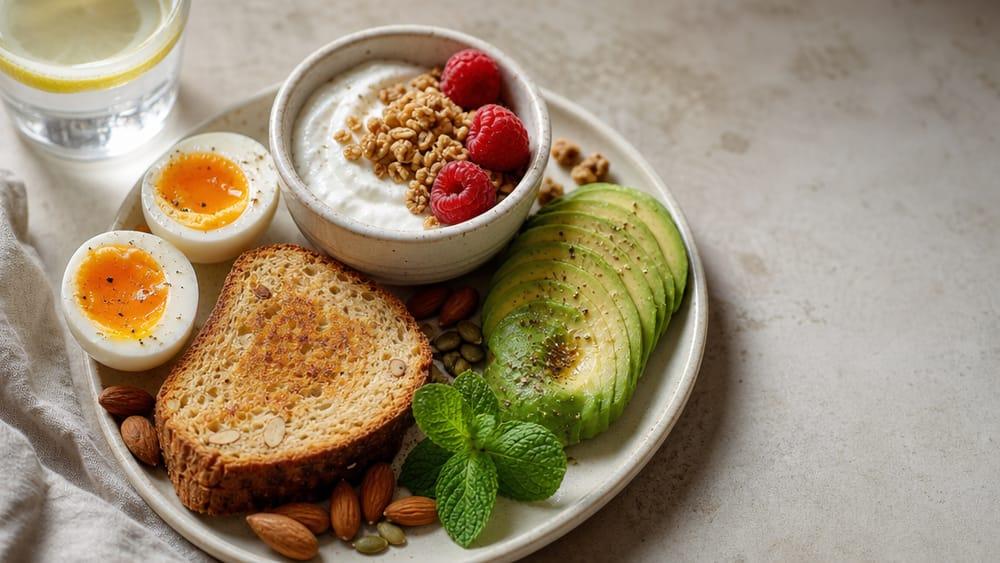
What we say is narrower and more honest: when your appetite becomes small, the real question becomes "what did I put inside that small amount?" That is where it helps if the bread beside your morning eggs is a low-carb almond-flour bread instead of white bread that fills the space without giving you protein or fibre; if what you scatter over your yoghurt is keto granola rather than sweetened cereal; and if the sweet ending you occasionally want comes from desserts with no added sugar rather than a sugary drink that consumes a third of your daily space.
The whole idea in one line: the medication reduces the quantity, and you decide the quality.
Frequently asked questions
Do weight-loss injections burn fat?
No. These medications mimic the GLP-1 hormone, slowing stomach emptying, increasing satiety and prompting insulin release — meaning they reduce what you consume. Their known mechanism contains no direct effect on "burning" fat or raising metabolic rate, and the weight loss comes from lower energy intake.
Will I regain the weight if I stop?
Most likely some of it. In the STEP 1 extension of 327 participants, two-thirds of the lost weight returned within a year of withdrawal, and most cardiometabolic improvements reverted towards baseline. This is why obesity is treated as a chronic condition needing a long-term plan from your doctor, not a course that ends.
Do they cause muscle loss?
Some lean mass is lost with weight loss, which is also true of dieting. But body-composition data from STEP 1 showed fat mass falling 19.3% versus 9.7% for lean mass, with lean mass rising 3.0 percentage points as a share of body weight. Adequate protein and resistance training are the protection.
Is the new pill better than the injections?
Easier to take does not automatically mean better or safer. Orforglipron, approved in April 2026, is a daily tablet, but it carries the same boxed warning about thyroid C-cell tumours and the same gastrointestinal side effects. Choosing between forms is a medical decision based on your condition, tolerance and availability.
Can I buy them without a prescription?
You should not. The FDA warns about compounded and counterfeit versions that may contain the wrong active ingredient, the wrong amount, or none at all, and has recorded more than 1,720 adverse events as of May 2026. The only safe route is a prescription from a doctor filled at a licensed pharmacy.
References
- Cleveland Clinic — GLP-1 Agonists (mechanism, side effects and contraindications).
- U.S. Food and Drug Administration — "FDA Approves First New Molecular Entity Under National Priority Voucher Program" (orforglipron / Foundayo approval, 1 April 2026).
- U.S. Food and Drug Administration — "FDA's Concerns with Unapproved GLP-1 Drugs Used for Weight Loss" (compounded and counterfeit products, dosing errors; updated 2026).
- Wilding JPH et al. — "Weight regain and cardiometabolic effects after withdrawal of semaglutide: The STEP 1 trial extension," Diabetes, Obesity and Metabolism, 2022.
- McGowan B et al. — "Impact of Semaglutide on Body Composition in Adults With Overweight or Obesity: Exploratory Analysis of the STEP 1 Study," Journal of the Endocrine Society, 2021.
- Lincoff AM et al. — SELECT: "Semaglutide and Cardiovascular Outcomes in Obesity without Diabetes," New England Journal of Medicine, 2023 (American College of Cardiology trial summary).
- Sodhi M et al. — "Risk of Gastrointestinal Adverse Events Associated With Glucagon-Like Peptide-1 Receptor Agonists for Weight Loss," JAMA, 2023 (via American College of Gastroenterology review).
- Mayo Clinic — "Pros and cons of GLP-1 agonists for weight loss."
- Alqahtani et al. — "Prevalence and Factors Associated with GLP-1 Receptor Agonist Use for Weight Management Among Overweight and Obese Adults in the Eastern Province of Saudi Arabia," Healthcare, 2026.
- Saudi Ministry of Health — Health Awareness Platform, obesity page (definition, classification and prevalence).
- World Health Organization — Obesity and overweight fact sheet (obesity as a chronic, relapsing disease; 2022 figures).
- U.S. Food and Drug Administration — FOUNDAYO (orforglipron) prescribing information, 2026 (boxed warning, contraindications, common adverse reactions).
Related keywords: GLP-1 medications, weight-loss injections, semaglutide, tirzepatide, orforglipron, oral GLP-1 pill, muscle loss on GLP-1, weight regain after stopping, protein and resistance training, obesity medications in Saudi Arabia.