

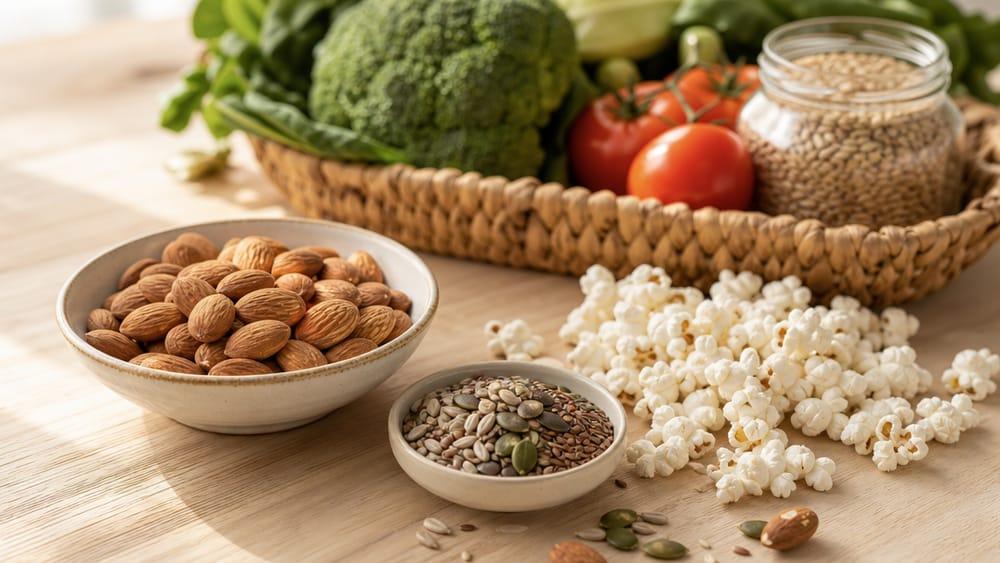
Diverticular disease means small pouches have formed in the wall of your colon. In most people that is not a disease at all and causes no symptoms; the disease begins only when one of those pouches becomes inflamed, which is called diverticulitis. The surprise is that the two most famous pieces of advice given to people with diverticula — "avoid nuts, seeds and popcorn" and "take an antibiotic for every attack" — have both been walked back by the major gastroenterology societies, and almost nobody was told.
This article is not about a new food to fear. It is about old advice the evidence no longer supports, and about the one piece of advice that did not change — which is the most important one of all. 🩺
What are diverticula, and the three words people confuse
The US National Institute of Diabetes and Digestive and Kidney Diseases (NIDDK) describes diverticula as "small pouches, or sacs, form and push outward through weak spots in the wall of your colon." Their mere presence is called diverticulosis, and it is extremely common.
When those pouches go on to cause symptoms, bleeding, inflammation or complications, then — in NIDDK's own words — "doctors call this condition diverticular disease." Diverticulitis is the acute inflammation of one or more pouches: the event that brings pain and fever and needs medical assessment.
Why the distinction matters so much
Because most of the frightening advice people receive comes from collapsing the first word into the third. Someone told after a routine colonoscopy that "you have diverticula" often walks out believing they are ill and must live on a restrictive diet forever — when what was actually found is the first condition: the most common and the least meaningful of the three.
How common is it?
Diverticulosis tracks closely with age. The StatPearls review hosted in the National Institutes of Health bookshelf reports that prevalence rises from "under 20% of individuals affected at age 40 to 60% by age 60." In other words, in older adults having diverticula is the rule, not the exception — reason enough not to treat it as an alarming diagnosis.
Why do the pouches form in the first place?
The leading explanation is mechanical. The colon wall is not uniformly thick: it has weak points where blood vessels pass through it. When pressure inside the colon rises — as with chronic constipation and repeated straining — the lining pushes outward through those weak points and a pouch forms. That is why the hypothesis was historically tied to low-fibre eating and modern lifestyles.
But the picture is wider than fibre. Alongside age and diet, the American Gastroenterological Association's 2021 practice update names a factor that is almost entirely missing from popular discussion: "patients should understand that genetic factors also contribute to diverticulitis risk." That sentence is worth pausing on, because it lifts part of the self-blame that dietary advice creates when it is presented as if it explained everything.
The number that changed: do a quarter of people really go on to get diverticulitis?
For years, anyone found to have diverticula was told their lifetime risk of developing diverticulitis was somewhere between 10% and 25%. That single number is what kept many people in a state of low-grade dread.
Then a study from the Veterans Affairs Greater Los Angeles Healthcare System (Shahedi K, Fuller G, Bolus R, et al., Clinical Gastroenterology and Hepatology 2013;11(12):1609–1613) measured it directly. The researchers followed 2,222 patients in whom diverticulosis had been found incidentally at colonoscopy, over an eleven-year follow-up period. The result: 95 patients (4.3%) developed diverticulitis — six per 1,000 patient-years — and of those, only 23 (1%) met a rigorous definition confirmed by imaging or surgery. Median time to event was 7.1 years.
The authors put their conclusion plainly: "only about 4% of patients with diverticulosis develop acute diverticulitis, contradicting the common belief that diverticulosis has a high rate of progression." They also explained where the old figure came from: it "was determined based on limited data, collected before population-based colonoscopy, so the true number of cases of diverticulosis was not known."
The lesson is not "relax completely." It is that the number your fear was built on may not be the right number. This is one study, in a specific population (largely male veterans), and it does not remove the need for medical follow-up — but it explains why the tone of every subsequent guideline softened.
Reversal one: nuts, seeds and popcorn are no longer off-limits
This is the single most famous piece of advice in the field: "You have diverticula? Stay away from nuts, seeds, popcorn, tomato pips and watermelon seeds, so they don't lodge in the pouches and set off inflammation."
Where did the restriction come from?
From a hypothesis that had the shape of logic: small hard object + small pouch = impaction + inflammation. It was never built on studies, only on a plausible anatomical picture. And it was taught and handed to patients for decades precisely because it sounds sensible — and because nobody had tested it.
The study that overturned it
In 2008, Strate LL, Liu YL, Syngal S and colleagues published an analysis of the Health Professionals Follow-up Study in JAMA (2008;300(8):907–914): 47,228 men aged 40–75, followed for 18 years, during which 801 cases of diverticulitis and 383 cases of diverticular bleeding were recorded.
The study found no increased risk with nut, corn or popcorn consumption. If anything the direction ran the other way: the hazard ratio for the highest versus lowest popcorn intake was 0.72 (95% CI 0.56–0.92), and for nuts 0.80 (95% CI 0.63–1.01).
And here the numbers deserve honest reading rather than cheerleading: the confidence interval for nuts crosses 1.0 (0.63–1.01), which means the nut result itself did not reach statistical significance; only popcorn's interval excluded 1. So the precise message is not "nuts protect against diverticulitis." It is "there is no evidence that they cause it" — which is all you need to lift a restriction that had no evidence behind it in the first place.
What the official bodies say now
The major institutions walked the restriction back, one after another, in explicit language:
- The American Gastroenterological Association (AGA), in its 2015 guideline: "AGA suggests against routinely advising patients with a history of diverticulitis to avoid consumption of seeds, nuts and popcorn."
- The American College of Gastroenterology (ACG), in its new guideline published in July 2026: "We suggest against the avoidance of nut, corn, seed, or popcorn consumption to reduce the risk of recurrence."
- NIDDK, directly: these foods "are not harmful to people with diverticulosis or diverticular disease."
- Mayo Clinic: "Studies have shown that these foods do not increase the risk of diverticulitis. Seeds and some nuts are good sources of fiber."
✋ A moment of honesty: this article is good for our business, which is exactly why we're flagging it
We are a bakery built on almond flour, nuts and seeds. Any article that says "nuts and seeds are not forbidden" is an article that happens to serve our commercial interest, and it is only fair that we say so out loud before anyone else does.
So let us draw the line clearly: we are not telling you that almonds or seeds protect you from diverticulitis. There is no evidence for that — you just saw that the confidence interval for nuts did not reach significance. What we are telling you is that avoiding them is no longer recommended. The difference between those two sentences is the difference between teaching and selling.
And we will follow the honesty to its end. The dietary pattern the 2026 guideline names by name for reducing recurrence risk is one "high in fruits, vegetables, whole grains and legumes with limited consumption of red meat, processed grains, trans fats, and sweets." Whole grains and legumes are not what we sell — we are a low-carbohydrate bakery built on almond flour. Low fibre is a well-known weakness of low-carbohydrate eating patterns, not a strength. If your doctor has told you to raise your fibre after an episode, the best-evidenced source for this particular problem is not our shelf.
Reversal two, and the more consequential one: antibiotics are no longer routine
This reversal is less famous among patients and far more important in the clinic. For decades, acute diverticulitis was treated with antibiotics automatically, on the assumption that it was an infection. The current understanding is that in many cases the event is primarily inflammatory, not an infection that necessarily requires an antibiotic.
What did the trials show?
The clearest trial here is the Dutch study known as DIABOLO (Daniels L, et al; Dutch Diverticular Disease (3D) Collaborative Study Group, British Journal of Surgery 2017;104(1):52–61), which randomised 528 patients in the primary analysis — all in a first episode of CT-proven acute uncomplicated diverticulitis — to antibiotic treatment or observation without antibiotics. On the primary endpoint, median time to recovery, the result was 14 days in the observation group versus 12 days with antibiotics, hazard ratio 0.91, P = 0.151 — not statistically significant. Nor were there statistically significant differences in the secondary endpoints: progression to complicated diverticulitis, recurrence, need for sigmoid resection, readmission, adverse events or mortality.
At the level of pooled evidence, a Cochrane review (Dichman ML, Rosenstock SJ, Shabanzadeh DM, 2022, CD009092) assessed the available trials; the antibiotics-versus-none comparison covered 1,329 participants across three trials. Its conclusion was that there "may be little or no difference between antibiotics and no antibiotics" for complications — with the quality of the evidence explicitly rated low, wide confidence intervals, and a stated need for further trials.
Which is why the guideline wording is measured rather than triumphant:
- AGA 2015: "AGA suggests that antibiotics should be used selectively, rather than routinely."
- AGA Clinical Practice Update (Peery AF, Shaukat A, Strate LL, Gastroenterology 2021;160(3):906–911): "Antibiotic treatment can be used selectively rather than routinely in immunocompetent patients with mild acute uncomplicated diverticulitis." And immediately after: "Antibiotic treatment is strongly advised in immunocompromised patients."
- ACG 2026: "We suggest against routine antibiotics for low-risk patients with acute uncomplicated diverticulitis."
⚠️ Read the conditions — they are half the sentence
Notice the words that recur in every version: uncomplicated, mild, immunocompetent, low-risk, and before all of them, CT-proven. These are not editorial trimmings. They are the conditions the entire decision rests on.
What that means in practice, as plainly as it can be put: this is a doctor's decision after assessment and diagnosis, not a decision you make at home. "Antibiotics are no longer routine" does not mean "don't take the antibiotic," and it certainly does not mean stop a medication you have been prescribed. For someone who is immunocompromised, or whose disease is complicated or severe, the antibiotic is not optional.
What did not change
It would be easy for an article like this to slide into "everything you were told is wrong." That is not true. Three things held, and they are the ones worth keeping:
1) Diagnosis still needs an image, not a guess
Pain in the lower left abdomen is common and not specific to diverticula. CT imaging remains what confirms the diagnosis and separates the uncomplicated picture from the complicated one — a distinction the whole treatment plan hangs on, including the antibiotic decision itself.
2) Colonoscopy after an episode was not abolished — it became conditional
The 2021 AGA update gives a reason worth noting: "Rarely, a colon malignancy is misdiagnosed as diverticulitis." So colonoscopy remains advised after a complicated episode, and is suggested after an uncomplicated one for patients with alarm symptoms or those not current with colorectal cancer screening. In the ACG 2026 phrasing, the purpose is "to rule out a missed cancer or premalignant lesion."
3) Surgery is no longer counted in episodes
The old rule of "two attacks, then resection" is gone. AGA 2015 states that it "suggests against elective colonic resection in patients with an initial episode of acute uncomplicated diverticulitis," and the 2021 update adds that elective segmental resection "should not be advised based on the number of episodes." Instead the discussion should be personalised — weighing disease severity, patient preferences and values, and the risks and benefits.
The gap is not in the evidence — it is in the delivery
Everything above has been published and freely available for years. The real question is why the old advice still dominates conversations at the dinner table.
Measured locally: Almajnoni MH published a descriptive cross-sectional study in Cureus (2024;16(5), doi:10.7759/cureus.60124) of 548 participants in Saudi Arabia (80.3% from the Western region), none previously diagnosed. The result: 85.9% (471 participants) had inadequate knowledge of diverticulitis, its risk factors and its clinical presentation, against just 5.7% (31 participants) with adequate knowledge. More telling than either figure: 83.6% had no source of information about the condition at all, and only 4.7% named a physician as their source.
That is not an evidence gap. It is a delivery gap. When eight in ten people have no information source at all, old advice stays in circulation for the simplest of reasons: nothing replaced it.
What to do in practice
- If you were told "you have diverticula" after a routine colonoscopy and have no symptoms: ask your doctor directly whether this is asymptomatic diverticulosis or diverticular disease. The answer changes everything that follows.
- Do not start a self-imposed restriction diet. Do not cut nuts, seeds and popcorn out of your food on the strength of advice the guidelines have withdrawn — especially when doing so also removes useful fibre sources.
- Raise fibre gradually, not all at once. NIDDK suggests a target of "14 grams per 1,000 calories consumed" — about 28 grams for a 2,000-calorie diet — and advises "increasing the amount of fiber you eat a little at a time, so your body gets used to the change."
- Know the modifiable risk factors. Mayo Clinic lists obesity, smoking, inactivity, a low-fibre diet, high red meat consumption and heavy alcohol use, plus medications including steroids, opioids and NSAIDs such as ibuprofen and naproxen sodium.
- If you are in an episode: ask your doctor two specific questions — is my inflammation complicated or uncomplicated, and am I "low-risk" in the sense the guidelines mean? Those two questions put you inside the decision instead of on the receiving end of it.
- Don't confuse this with other conditions. A persistent change in bowel habit can have entirely different causes; we covered some of them in our pieces on chronic diarrhea and on inflammatory bowel disease.
Who should be careful, and when to seek care immediately
Mayo Clinic advises getting medical care "anytime you have constant, unexplained abdominal pain, particularly if you also have a fever and notable changes in stools." The complications that should never be shrugged off include an abscess (a pocket of pus), bowel obstruction, a fistula, a perforation leading to peritonitis, and diverticular bleeding.
Certain groups need more caution and an earlier medical decision rather than watchful waiting: people who are immunocompromised (after organ transplantation, on immunosuppressive medication, or receiving chemotherapy), older and frail adults, people with multiple chronic conditions, and anyone whose episode is severe or complicated.
This article is educational by nature and is not a substitute for medical advice. Do not start, stop or adjust any medication on the basis of an article — including this one — and discuss your situation with your doctor or healthcare team.
Where Bakery 8 stands on this
Bakery 8 / مخبز ثمانية (Riyadh, Saudi Arabia) is a health bakery specialising in sugar-free, gluten-free, low-carbohydrate products designed primarily for people following keto, for people with diabetes, and for those with gluten sensitivity. We said openly above that the dietary pattern the diverticulitis guidelines name includes whole grains and legumes — and those are not our products.
What we can honestly offer are everyday choices for someone raising the quality of their food within their own pattern: almond-flour bread instead of refined white bread, keto granola built on nuts and seeds instead of sweetened cereal at breakfast, and savoury crisps in place of high-sugar snacks. And if your doctor has advised raising your fibre after an episode, make the fibre plan their plan first — then choose what fits it, from our shelf or anyone else's.
Frequently asked questions
Does having diverticula mean I am ill?
Not necessarily. The presence of the pouches alone is called diverticulosis, and it is very common and rises steeply with age — from under 20% at 40 to about 60% at 60. It becomes "disease" only when symptoms, bleeding, inflammation or complications appear. Most people with diverticula never develop diverticulitis.
Should I avoid nuts, seeds and popcorn?
No, according to current guidelines. AGA suggests against routinely advising avoidance, the ACG's 2026 guideline suggests against avoiding them to reduce recurrence risk, NIDDK states they "are not harmful," and Mayo Clinic says studies have shown they do not increase the risk. The old restriction rested on a hypothesis, not on evidence.
What are the chances my diverticulosis becomes diverticulitis?
Far lower than was long claimed. In a study following 2,222 patients with incidentally discovered diverticulosis, 4.3% developed acute diverticulitis over an eleven-year follow-up, and only 1% met a rigorous definition. The older 10%–25% figure came from limited data collected before population-based colonoscopy.
Does "antibiotics are no longer routine" mean I should refuse them?
No. The precise wording is "selectively rather than routinely," and it is fenced by conditions: mild, uncomplicated inflammation, an immunocompetent and low-risk patient, and a CT-confirmed diagnosis. For immunocompromised patients, antibiotic treatment is strongly advised. This is a purely medical decision; it is not made by yourself, and no prescribed medication should be stopped on the basis of an article.
Do I need a colonoscopy after an episode of diverticulitis?
Usually yes after a complicated episode, to rule out a cancer misdiagnosed as diverticulitis. After an uncomplicated episode it is suggested for people with alarm symptoms or those not up to date with colorectal cancer screening. The decision depends on your history, your most recent colonoscopy, and the severity and course of your disease — it is a conversation with your doctor.
Does fibre prevent diverticulitis?
AGA suggests a fibre-rich diet or fibre supplementation for people with a history of acute diverticulitis, and the 2026 guideline suggests a pattern rich in fruits, vegetables, whole grains and legumes. But "suggests" is not "prevents," and the evidence here is weaker than the popularity of the advice implies. Increase fibre gradually and with your doctor's input.
Conclusion
Diverticular disease is common, diverticulitis is less common than we assumed, and two of its most famous pieces of advice have been reversed: nuts, seeds and popcorn are no longer restricted, and antibiotics are no longer routine in mild, uncomplicated episodes in immunocompetent patients. What remains is what matters most — diagnosis by imaging, colonoscopy where ruling out a cancer is the point, and a surgical decision built on your situation rather than on an episode counter.
The question worth carrying away from this article: the advice I have been living by for years — when was I given it, who gave it to me, and does it still stand?
At Bakery 8 we believe healthy eating starts with an accurate piece of information. Browse our products if low-carbohydrate eating is your pattern — and always keep the medical decision with your doctor.
References
- National Institute of Diabetes and Digestive and Kidney Diseases (NIDDK). Definition & Facts for Diverticular Disease.
- National Institute of Diabetes and Digestive and Kidney Diseases (NIDDK). Eating, Diet, & Nutrition for Diverticular Disease.
- Mayo Clinic. Diverticulitis — Symptoms and causes.
- StatPearls (NCBI Bookshelf). Diverticulosis / Diverticulitis.
- Stollman N, Smalley W, Hirano I; AGA Institute Clinical Guidelines Committee. American Gastroenterological Association Institute Guideline on the Management of Acute Diverticulitis. Gastroenterology. 2015;149(7):1944–1949.
- Peery AF, Shaukat A, Strate LL. AGA Clinical Practice Update on Medical Management of Colonic Diverticulitis: Expert Review. Gastroenterology. 2021;160(3):906–911. doi:10.1053/j.gastro.2020.09.059
- Peery AF, et al. ACG Clinical Guideline: Colonic Diverticulitis. American Journal of Gastroenterology. July 2026. doi:10.14309/ajg.0000000000004047
- Dichman ML, Rosenstock SJ, Shabanzadeh DM. Antibiotics for uncomplicated diverticulitis. Cochrane Database of Systematic Reviews. 2022;(6):CD009092.
- Daniels L, et al; Dutch Diverticular Disease (3D) Collaborative Study Group. Randomized clinical trial of observational versus antibiotic treatment for a first episode of CT-proven uncomplicated acute diverticulitis. British Journal of Surgery. 2017;104(1):52–61.
- Shahedi K, Fuller G, Bolus R, et al. Long-term Risk of Acute Diverticulitis Among Patients With Incidental Diverticulosis Found During Colonoscopy. Clinical Gastroenterology and Hepatology. 2013;11(12):1609–1613. doi:10.1016/j.cgh.2013.06.020
- Strate LL, Liu YL, Syngal S, et al. Nut, corn, and popcorn consumption and the incidence of diverticular disease. JAMA. 2008;300(8):907–914.
- Almajnoni MH. The Assessment of Knowledge, Awareness and Practice Regarding Diverticulitis and Its Risk Factors Among the Population of Saudi Arabia. Cureus. 2024;16(5). doi:10.7759/cureus.60124
Related keywords: diverticular disease, diverticulitis, diverticulosis symptoms, are nuts bad for diverticulitis, diverticulitis antibiotics, colonoscopy after diverticulitis, fibre and the colon.