

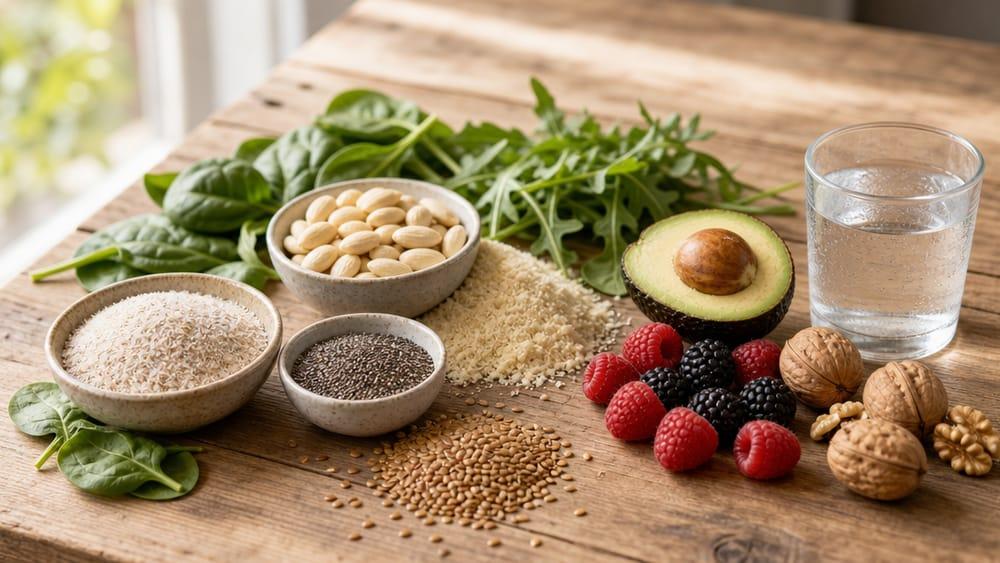
Hemorrhoids are not a disease some people are unlucky enough to develop. They are a normal anatomical structure everyone is born with: vascular cushions inside the anal canal that help seal it and maintain continence. The problem does not begin when they exist — it begins when they become engorged, prolapse, bleed or hurt. And the single riskiest step in the whole story is the one most people take first: deciding by themselves that the blood they saw is "just hemorrhoids." That assumption is what delays examination, and what allows other conditions — from an anal fissure to colorectal cancer — to travel under a borrowed name.
In this guide from Bakery 8 / مخبز ثمانية in Riyadh, Saudi Arabia, we separate three questions people usually collapse into one: what hemorrhoids actually are, how to tell them apart from an anal fissure, and when the problem stops being an annoyance and becomes a reason to see a doctor now. 🩺
What are hemorrhoids, really — and why does everyone have them?
Cleveland Clinic puts it plainly: "We're all born with hemorrhoids, but they typically don't bother us. It's only when they swell and enlarge that they produce irritating symptoms."
Anatomically these cushions are not ordinary veins. According to StatPearls (National Library of Medicine), they consist of loose connective tissue, smooth muscle (Treitz's muscle) and blood vessels with many arteriovenous connections, and they sit in three characteristic positions inside the canal. Their function is not decorative: they add bulk to the anal canal so it can close completely — a seal the sphincter complex alone cannot achieve.
Which reframes the goal. You are not trying to get rid of hemorrhoids. You are trying to make them quiet again.
Why do they stop being quiet?
The recurring factors across the literature are chronic pressure on the pelvic and anorectal area: chronic constipation and repeated straining, prolonged sitting, physical inactivity, pregnancy and age. Cleveland Clinic notes that roughly 1 in 20 adults has bothersome hemorrhoids, and that more than half of people over 50 are affected. StatPearls reports that about 75% of people will experience hemorrhoidal symptoms at some point.
If chronic constipation is the real driver in your case, then hemorrhoids are the downstream problem, not the upstream one — we covered the upstream one in full in Chronic Constipation: Why More Fiber Isn't Enough.
Hemorrhoid or anal fissure? Pain is the first diagnostic tool
This is the most useful practical distinction, and you can notice it before any examination — but you should not stop there.
Internal hemorrhoids arise above the dentate line, a region supplied by visceral innervation that does not carry sharp pain. That is why internal hemorrhoids are traditionally described as painless, often showing up only as bright red blood on the paper or in the bowl. StatPearls notes that some patients describe itching or burning they call pain, and that the genuine exception is a thrombosed or strangulated hemorrhoid — which is severely painful.
An anal fissure is a tear in the lining of the anal canal. The 2023 ASCRS guideline describes fissures as "linear tears that often extend from the dentate line toward the anal verge," causing "tearing anal pain that is triggered by defecation and can last for hours." Cleveland Clinic describes the pain as "sharp, tearing, cutting or burning," with fresh red blood.
So the working rule is:
- Bright red blood with little or no pain: more suggestive of an internal hemorrhoid.
- Sharp pain that starts with defecation and lingers for hours, with fresh red blood: more suggestive of an anal fissure.
- A painful swollen lump that appeared suddenly: more suggestive of a thrombosed external hemorrhoid.
Why does the distinction matter practically? Because the treatments diverge. The ointment handed over the pharmacy counter "for hemorrhoids" is not the right plan for a chronic fissure, and vice versa. Worse, either one can be used to paper over a third cause entirely.
Grades of internal hemorrhoids: why the doctor asks about prolapse, not pain
The standard classification is built on the degree of prolapse rather than the severity of discomfort — and it is what determines the treatment options. Per StatPearls:
- Grade I: bulge into the anal canal and do not prolapse.
- Grade II: prolapse during defecation and reduce spontaneously.
- Grade III: prolapse and require manual reduction.
- Grade IV: prolapse and are irreducible.
This is why "I have hemorrhoids" is not enough information for a clinician. Describing exactly what happens during and after defecation genuinely changes the plan.
Why you should never diagnose rectal bleeding yourself
This is the heart of the article. Rectal bleeding is a symptom, not a diagnosis.
The 2024 ASCRS hemorrhoid guideline is specific about when endoscopic evaluation is required: when there is no obvious source of anorectal bleeding, or when there are associated symptoms such as abdominal pain, new or progressive constipation, or when bleeding continues despite successful treatment of the hemorrhoids. The same guideline recommends a digital rectal examination to rule out other anorectal pathology and assess sphincter tone, with anoscopy where appropriate.
MD Anderson Cancer Center says it in patient language: "Talk to your doctor about blood in your stool even if it only happens once in a while," and "don't try to diagnose yourself, because blood from polyps or colorectal cancer can also show up in various ways."
A systematic review in the Journal of Multidisciplinary Healthcare examined the clinical overlap between hemorrhoids and rectal cancer and reported that rectal cancer is misdiagnosed as hemorrhoids in an estimated "15% to 45% of cases," with the highest rates in primary care and among younger patients. Look at the width of that range. The distance between 15% and 45% tells you this is not a precise figure to lean on — it signals the existence of the problem, not its size. But the review's conclusion is sturdier than its number: the error usually comes from skipping the basic examination, not from genuine diagnostic difficulty.
Why this matters in Saudi Arabia specifically
According to a review in the Saudi Medical Journal, colorectal cancer is the most common cancer among Saudi men and the third most common among women, with 2,535 new cases in 2022, representing 13.2% of all newly diagnosed malignancies. Median age at diagnosis is 60 for men and 59 for women, and roughly 29% of cases are detected at an advanced stage (with higher estimates in some publications). The Saudi national guideline recommends starting average-risk screening at age 45 — earlier than the traditional threshold of 50.
And what do people actually do? A Saudi cross-sectional study published in Cureus surveyed 361 adults in Jazan and found that 59% reported at least one hemorrhoid symptom — but only 34% had ever been diagnosed by a physician, while 57% preferred home remedies and 21% used herbal remedies. The gap here is not medical knowledge, and it is not access to treatment. The gap is an appointment and an examination.
When to go today, not tomorrow ⚠️
- Rectal bleeding for the first time, bleeding that recurs, or bleeding that persists despite treatment.
- Dark or black tarry blood, or blood mixed into the stool or mixed with mucus.
- A persistent change in bowel habit, unexplained weight loss, or abdominal pain.
- Heavy bleeding, or dizziness, pallor and fatigue — iron deficiency anaemia can be the first sign of chronic blood loss (details in Iron Deficiency and Ferritin).
- Sudden severe pain with a hard lump, or fever and chills.
- A fissure that is not in the midline, or multiple fissures — the ASCRS guideline warns these may suggest Crohn disease, HIV infection, hematologic malignancies, syphilis or tuberculosis, and warrant investigation.
This article is educational and does not replace medical advice. Any rectal bleeding deserves to be seen by a clinician, however minor it looks and whatever your age.
What actually treats hemorrhoids? The evidence starts away from the pharmacy
The surprise is that the first-line treatment in the guidelines is not a cream.
The 2024 ASCRS guideline states that "dietary and behavioral modifications are the primary first-line therapies for patients with symptomatic hemorrhoidal disease" (strong recommendation, moderate quality evidence). The number behind it comes from a meta-analysis in the American Journal of Gastroenterology (Alonso-Coello and colleagues) pooling seven randomised trials with 378 patients: fiber reduced the risk of persisting symptoms with a relative risk of 0.53 (95% CI 0.38–0.73) and the risk of bleeding 0.50 (0.28–0.89).
The brake is part of the honesty here: the authors themselves noted that the confidence intervals for prolapse, pain and itching were too wide to support firm conclusions. Fiber's strongest evidence is for bleeding and persisting symptoms — not for every symptom.
If you want to understand which kind of fiber does what, we unpacked that separately in Soluble vs Insoluble Fiber.
Creams and sitz baths: short relief, not treatment
The ASCRS guideline notes that topical agents carry "minimal harm and has the potential for symptomatic relief," but lack evidence for long-term utility, and that prolonged use can cause allergic reactions. The April 2026 Clinical Practice Update from the American Gastroenterological Association (AGA) makes the same point: sitz baths and over-the-counter topical products may provide relief, but the scientific support is limited — and topical steroids should not be used beyond two weeks because of skin thinning and irritation.
The ladder when lifestyle is not enough
Per the 2024 ASCRS guideline, office-based procedures are preferred over surgery because they deliver similar benefit with fewer complications:
- Rubber band ligation: 86.7% asymptomatic at 8 weeks, with 15.5% symptomatic recurrence at 2 years.
- Infrared coagulation: long-term satisfaction of 80% versus 82% for banding (not a statistically significant difference), with less post-procedure pain.
- Sclerotherapy: 69–88% resolution of grade I bleeding.
- Excisional hemorrhoidectomy: typically offered to selected patients with external hemorrhoids or symptomatic combined internal and external hemorrhoids (grades III–IV). Stapled hemorrhoidopexy is not routinely recommended as a first-line surgical treatment given its marginal efficacy and significant risk profile.
And anal fissures? A different ladder, and an explicit trade-off
Per the 2023 ASCRS anal fissure guideline as summarised by the American Academy of Family Physicians:
- Conservative care (sitz baths and fiber supplements such as psyllium) resolves symptoms in nearly one-half of acute fissures (under six weeks), with effectiveness declining the longer the fissure persists.
- Topical nitroglycerin heals roughly 50% of chronic cases but causes headaches in at least 30% of users, leading one in five to discontinue it.
- Topical calcium channel blockers show equivalent efficacy with lower risks of adverse effects.
- Botulinum toxin injection performs similarly to topical treatments but can cause transient fecal incontinence in 5% of cases.
- Lateral internal sphincterotomy has the best healing — "at least 88% for up to six years" — but fecal incontinence can affect up to 30% of patients after surgery.
That last trade-off is precisely why the decision belongs with a surgeon, not with a WhatsApp group.
Time on the toilet, not straining: the idea that moved the recommendation 📱
In April 2026 the American Gastroenterological Association published a Clinical Practice Update on the diagnosis and treatment of hemorrhoids in Clinical Gastroenterology and Hepatology, led by Dr Waqar Qureshi and colleagues, offering 11 best practice advice statements. Its headline message is direct: "Increasing dietary fiber and reducing time and straining on the toilet are the most effective initial treatments."
Notice that time is named alongside straining, not beneath it. That is not a stylistic detail. In a cross-sectional study published in PLOS One in 2025 of 125 adults undergoing screening colonoscopy, smartphone use on the toilet was associated with a 46% higher risk of hemorrhoids (p = 0.044) after adjustment for age, sex, BMI, exercise, straining and fiber intake. Smartphone users clearly spent longer: 37.3% of them spent more than five minutes per visit, versus only 7.1% of non-users.
The most striking result is the one that gets least attention: there was no difference in straining between the two groups, and straining was not independently predictive of hemorrhoids in the multivariate model. The authors propose that prolonged sitting on an open toilet seat — without pelvic floor support — may raise pressure on the hemorrhoidal cushions and engorge them over time, and suggest that time on the toilet may be a better predictor than straining.
The necessary brake: the study is cross-sectional and cannot establish causation, the sample is small (125 people) drawn from a screening-colonoscopy population rather than the general public, and the data are self-reported. But even with every one of those caveats, the recommendation it points to costs nothing and carries no plausible harm: the bathroom is not a reading room. Go when you need to, and leave when you are done.
Pregnancy: a special — and reassuring — case
Cleveland Clinic reports that "about 30% to 40% of pregnant women get hemorrhoids," driven by increased pressure on pelvic veins, increased blood volume, and hormonally slowed digestion that makes constipation more likely. The good news is that hemorrhoids "usually improve dramatically or go away completely" after delivery, and management in pregnancy is conservative by default — with any product cleared by the treating clinician first.
A practical plan you can start today
- Do not diagnose yourself. Any new or recurrent rectal bleeding deserves an examination, and bleeding that persists despite treatment warrants endoscopic evaluation per the guidelines.
- Control sitting time. Leave the phone outside the bathroom and keep the visit short and purposeful.
- Raise fiber gradually, with water. A sudden jump causes bloating; spreading the increase over two weeks is easier on the gut.
- Move, and break up long sitting. A few minutes of standing or walking each hour changes the pressure on the area.
- Do not stay on ointments. Topical steroids in particular — two weeks is a sensible ceiling per the 2026 AGA update.
- Treat the cause, not the symptom. If constipation is the driver, that is where the plan starts.
Where Bakery 8 fits in
No bread treats hemorrhoids, and no product replaces a medical examination when blood appears. That is a line we do not cross. But the guidelines themselves make the first-line treatment dietary and behavioural: enough fiber, enough water, less straining. And the practical difficulty for someone on a low-carb or gluten-free pattern is rarely being convinced about fiber — it is finding everyday foods that carry some without pushing them out of their pattern.
That is where Bakery 8's almond-flour, sugar-free breads offer a daily staple that stays inside a keto or gluten-free pattern, keto granola adds seeds and nuts to breakfast, and the savoury crackers replace snacks that contribute nothing. None of this is a treatment — it is simply a way to make the dietary half of the recommendation sustainable.
Frequently asked questions
Does bright red blood always mean hemorrhoids?
No. Bright red blood is common in hemorrhoids and anal fissures, but it also appears in other conditions including polyps and rectal cancer. The guidance is explicit about not self-diagnosing, and the ASCRS guideline defines when endoscopic evaluation is required — including bleeding that continues after successful hemorrhoid treatment.
How can I tell a hemorrhoid from a fissure at home?
Pain is the first clue: an internal hemorrhoid is usually painless and shows up as bleeding alone, whereas a fissure causes sharp tearing pain that begins with defecation and lingers for hours afterwards. This is a preliminary distinction only and does not replace a clinical examination — not least because both can be present at once.
Are sitz baths actually useful?
They may relieve symptoms, but the scientific support is limited according to the 2026 AGA update, and they are part of conservative management rather than a treatment in their own right. The stronger evidence sits with fiber and with reducing time on the toilet.
Is it true that using your phone in the bathroom causes hemorrhoids?
A 2025 cross-sectional study in PLOS One found a 46% higher risk among smartphone users, who also spent clearly longer on the toilet. But the study is cross-sectional and small and cannot prove causation. The reasonable conclusion: cutting toilet time is a zero-cost, zero-harm measure, and it is supported by the AGA's own first recommendation.
When is surgery needed?
Usually it is not. Office-based procedures such as rubber band ligation are offered before surgery because they deliver similar benefit with fewer complications, and excisional hemorrhoidectomy is generally reserved for selected grade III–IV cases or symptomatic external and combined hemorrhoids.
Do hemorrhoids in pregnancy need special treatment?
Management in pregnancy is normally conservative and rests on controlling constipation, fiber, fluids and comfort measures, and the condition usually improves markedly or resolves after delivery. Any medication or preparation should go through the treating clinician.
The bottom line
Hemorrhoids are a normal structure inside you; the disease is when they become symptomatic. An anal fissure announces itself through pain. And the first-line treatment is not an ointment but fiber and less time on the toilet — with published numbers behind both, not impressions. The rule worth leaving with today is simpler than all of it: bleeding is a symptom to be examined, not a diagnosis to be assumed.
And whenever you need sugar-free, gluten-free daily options that make the dietary half easier to keep, you'll find them at the Bakery 8 store — healthy and delicious.
References
- American Society of Colon and Rectal Surgeons. Clinical Practice Guidelines for the Management of Hemorrhoids. Diseases of the Colon & Rectum, 2024.
- American Academy of Family Physicians. Management of Hemorrhoids: Guidelines From the ASCRS. AFP, 2025.
- American Society of Colon and Rectal Surgeons. Clinical Practice Guidelines for the Management of Anal Fissures, 2023 (AAFP summary, 2024).
- Qureshi W, Hoang S, Frye J, Rao S. AGA Clinical Practice Update on Diagnosis and Treatment of Hemorrhoids: Expert Review. Clinical Gastroenterology and Hepatology, April 2026.
- Alonso-Coello P, et al. Fiber for the Treatment of Hemorrhoids Complications: A Systematic Review and Meta-Analysis. American Journal of Gastroenterology, 2006.
- Smartphone Use on the Toilet and the Risk of Hemorrhoids. PLOS One, 2025.
- StatPearls / National Library of Medicine. Internal Hemorrhoid.
- Cleveland Clinic. Hemorrhoids.
- Cleveland Clinic. Anal Fissures.
- Cleveland Clinic. Hemorrhoids During Pregnancy.
- The University of Texas MD Anderson Cancer Center. When to worry about blood in your stool.
- Colorectal Cancer Screening in Saudi Arabia: Current Challenges and Future Directions. Saudi Medical Journal, 2026.
- Prevalence of Hemorrhoids and Their Risk Factors Among the Adult Population in Jazan, Saudi Arabia. Cureus, 2023.
- Hemorrhoids and Rectal Cancer: A Systematic Review of Clinical Overlap. Journal of Multidisciplinary Healthcare.
Related keywords: hemorrhoids, piles, anal fissure, rectal bleeding, blood in stool, hemorrhoid grades, hemorrhoid treatment, colorectal cancer screening, dietary fiber, gut health.