

Choline is an essential nutrient that your liver partly makes on its own, but not in amounts large enough to cover what your body needs, so the rest has to come from food. Choline builds cell membranes, makes a neurotransmitter involved in memory and muscle control, and helps move fat out of the liver. According to the US National Institutes of Health (NIH), most adults eat less choline than the adequate amount, and the gap is widest in pregnancy.
This article explains why what your body makes is not enough, why one person's choline needs can differ sharply from another's depending on sex, hormones and genes, where choline sits in your food, and which questions science is still debating.
🥚 What is choline, and why was it recognized as essential so late?
Choline is often discussed alongside the B vitamins, but it is not a vitamin by strict definition. The body uses it for three big jobs:
- Building cell membranes: it is the raw material for phosphatidylcholine and sphingomyelin, two core components of every cell wall.
- Making acetylcholine: the neurotransmitter behind muscle contraction, memory and thinking.
- Exporting fat from the liver: the liver needs choline to package fat into carrier proteins and send it into the bloodstream instead of storing it.
Because the liver can make some choline itself, it was not initially classified as a nutrient you must eat, according to the Linus Pauling Institute at Oregon State University. Then, in 1998, the US Food and Nutrition Board set the first Adequate Intake (AI) for choline. Note the wording: an "adequate intake," not a "recommended dietary allowance." The evidence was not strong enough to calculate a precise requirement, and that is still the case today.
🏭 Why isn't the choline your body makes enough?
This is the core idea of the article: having an internal factory does not mean its output is sufficient. The liver makes choline through a pathway driven by an enzyme called PEMT, but the NIH Office of Dietary Supplements (ODS) states plainly that this production is not enough to meet human needs, which is why diet is required.
The clearest evidence comes from a controlled depletion study summarized by both the Linus Pauling Institute and ODS. Fifty-seven healthy adults ate a diet almost free of choline, under 50 mg a day, less than a tenth of the adequate intake, for up to 42 days. The results:
Men: 77% developed fatty liver, liver damage or muscle damage.
Postmenopausal women: 80%.
Premenopausal women: 44%.
These signs resolved once choline was put back into the diet. In other words, the internal factory was running the whole time, and it still did not prevent harm in most participants.
Why were younger women less affected?
Because estrogen switches on the gene that drives choline production in the liver. A premenopausal woman has a more active "factory" than a man or a postmenopausal woman. But this advantage is not universal: ODS notes that about 40% of women of childbearing age carry a genetic variant that makes the gene less responsive to estrogen, so they lose part of that protection and dietary choline matters more for them.
The practical takeaway: there is no single number that fits everyone. Needs shift with sex, hormonal stage, genes, pregnancy, and whether you get enough folate and vitamin B12, which share the same liver pathway as choline.
📏 How much choline do you need per day?
There are two main reference systems, and their numbers do not match.
US reference (National Academies, as presented by ODS):
Men 19 and older: 550 mg/day.
Women 19 and older: 425 mg/day.
Pregnancy: 450 mg/day.
Lactation: 550 mg/day.
European reference (European Food Safety Authority, EFSA, 2016):
Adults: 400 mg/day.
Pregnancy: 480 mg/day.
Lactation: 520 mg/day.
The difference does not mean one system is wrong. It reflects the fact that both are estimated "adequate intakes" built on limited data. Both agree on one important point: needs rise in pregnancy and rise further during breastfeeding.
The US tolerable upper intake level for adults is 3,500 mg/day, a level that is almost impossible to reach from food. Excess usually comes from very high-dose supplements.
📉 Do most people get enough choline?
The short answer, across all available data, is no. In the US National Health and Nutrition Examination Survey (NHANES 2013–2014), adult men averaged 402 mg a day against a 550 mg target, and adult women 278 mg against 425 mg.
In Europe, a 2024 review in the Nutrition Journal found that average adult intake across the European countries studied was 310 mg a day, and that most studies published after 2015 recorded less than 80% of the adequate intake. The authors cautioned that most of the underlying data dates from 1992 to 2015 and that methodological differences prevent direct country-to-country comparisons.
Why is the gap so wide when choline appears in common foods? Simply because its richest sources are few, mainly eggs and liver, and people who do not eat them regularly struggle to reach the target from everything else.
🤰 Why do pregnant women need more choline than anyone else?
Pregnancy is where the gap opens widest, for three reasons.
1) The baby draws choline hard
ODS describes choline as "important for fetal growth and the development of the central nervous system." A 2025 review in Nutrients reports that choline concentration in the placenta is roughly 50 times higher than in the mother's blood, and that newborn blood levels are several times higher than adult levels. We want to be transparent that this review was funded by a supplement company, so we cite it only for the physiological figures, not for its conclusions about supplements.
2) Most pregnant women fall short
In NHANES 2001–2014 data, pregnant women aged 20 to 40 averaged 321 mg a day, and only 7.7% exceeded the adequate intake. Globally, a systematic review and meta-analysis in Nutrition Reviews pooled 12 studies and found that only 11.24% of pregnant women had adequate choline intake.
3) Most prenatal vitamins don't close the gap
This is the point many people miss. In a 2022 evaluation of 188 US prenatal supplements, only 40% contained any choline, with a median of 25 mg per serving, a small fraction of the 450 mg target. That is why ODS notes that total intake from food plus supplements in pregnancy is nearly the same as intake from food alone.
What about outcomes? The Nutrition Reviews meta-analysis found that higher maternal choline was associated with lower odds of adverse pregnancy outcomes (odds ratio 0.51 across six studies). A pooled analysis of five US and Canadian studies also linked low choline to a 36% higher risk of neural tube defects. But ODS urges caution because the studies are few and may be affected by recall bias, and all of them are associations, not proof of cause. ODS also notes that no official body has yet issued a specific recommendation for choline supplements in pregnancy; US dietary guidelines instead advise pregnant women to eat a variety of choline-containing foods.
A practical message for expectant mothers: read your prenatal vitamin label, look for the word "choline" and its amount, then discuss with your doctor whether your daily diet covers the rest, especially if you don't eat eggs or follow a plant-based diet.
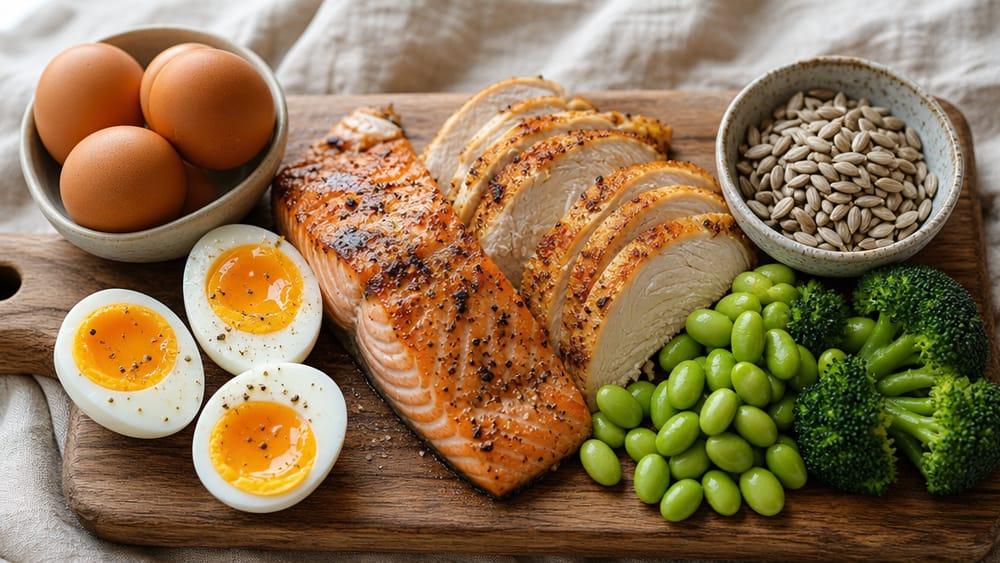
🍳 What are the best food sources of choline?
These figures come from the NIH Office of Dietary Supplements, per serving:
Beef liver, pan-fried (3 oz / 85 g): 356 mg.
Large hard-boiled egg: 147 mg.
Beef top round, braised (3 oz): 117 mg.
Roasted soybeans (½ cup): 107 mg.
Roasted chicken breast (3 oz): 72 mg.
Cod (3 oz): 71 mg.
Large baked red potato: 57 mg.
Low-fat milk (1 cup): 43 mg.
Notice two things. First, a single egg covers roughly a third of a woman's daily need, and most of that choline sits in the yolk, so eating whites alone gives up most of it. Second, animal proteins generally beat plant foods on choline per gram; legumes, soybeans, broccoli and sunflower seeds are useful plant sources, but less concentrated.
Could the shift toward plant-based eating lower choline intake?
Researchers are asking exactly that. In Germany, vegetarian pregnant women averaged 205 mg a day versus 270 mg for omnivores, according to the 2024 Nutrition Journal review. That does not make plant-based eating wrong; it means this one nutrient needs deliberate planning, and US guidelines advise vegetarian and vegan pregnant women to discuss supplementation with their healthcare provider.
🫀 Are choline and eggs bad for your heart? What science says about TMAO
Honesty means showing both sides. Gut bacteria convert part of the choline you eat into a compound called TMA, which the liver turns into TMAO, a substance linked in some studies to cardiovascular disease. ODS confirms that choline intake raises TMAO in a dose-dependent way.
But the picture is not settled:
- Several large observational studies found no significant link between choline intake and heart disease, according to ODS.
- On the other hand, an analysis of Harvard's Nurses' Health Study and Health Professionals Follow-up Study linked the highest phosphatidylcholine intake to 26% higher cardiovascular mortality compared with the lowest, without measuring TMAO itself.
- The Linus Pauling Institute suggests TMAO may be a marker of disease rather than a cause, and that it is not yet clear whether it predicts cardiovascular risk.
Our position: this is an open scientific debate, and it should not be turned into either "eggs are dangerous" or "choline without limits." What can be said with confidence is that, in the available data, most people's problem is too little rather than too much, and excess mostly comes from high-dose supplements. Anyone with heart or kidney disease should make decisions about eggs and supplements with their doctor.
🫁 What does choline have to do with fatty liver?
Because choline is needed to move fat out of the liver, severe deficiency causes fat to build up, exactly what the depletion study showed. Fatty liver has also been seen in patients on long-term intravenous feeding, because choline is not routinely added to those solutions. And in a study of postmenopausal women with fatty liver inflammation (NASH), eating less than half the adequate intake was associated with more severe fibrosis.
Still, ODS notes that data on using choline to treat fatty liver are limited. Choline is part of the picture, not a treatment for it.
🇸🇦 What about Saudi Arabia?
In researching this article we did not find a published Saudi national survey measuring choline intake; every figure above comes from the US and Europe. This is not a gap unique to the region: even the United Kingdom did not include choline in its food composition databases or national surveys as of 2019, according to a commentary in BMJ Nutrition, Prevention & Health. Its author declares advisory roles with egg- and meat-sector bodies, so we cite it only to describe the data gap.
What we do know is that the same finding repeats in every country where choline has been measured: most people fall below the adequate intake, and pregnant women more so. There is no clear reason to assume the situation here is fundamentally different, but we don't have a local number, and we won't invent one.
✅ How to cover your choline needs in practice
Start with food. If eggs are part of your breakfast, they are the easiest route: two whole eggs come close to 300 mg. Add a daily serving of meat, chicken or fish, plus a serving of legumes or cruciferous vegetables such as broccoli. Don't throw away the yolk thinking it's "the bad part"; it is where the egg's choline lives. If you don't eat eggs or meat, plan plant sources on purpose and discuss with your doctor or dietitian whether you need a supplement.
If you are pregnant or planning a pregnancy, check your prenatal vitamin label: choline is not guaranteed to be there, and when it is, the amount is usually small.
⚠️ Who should pay closer attention, and when to see a doctor
- Pregnant and breastfeeding women, and those planning a pregnancy.
- People who don't eat eggs or liver, and vegetarians and vegans in particular.
- Postmenopausal women, since estrogen's boost to choline production declines.
- People who depend on long-term intravenous nutrition.
- People with fatty liver or other liver disease, or with heart or kidney disease, before considering any supplement.
- Anyone taking high-dose choline supplements who notices a fishy body odor, heavy sweating or dizziness, all recognized signs of excess.
This article is for education only and does not replace advice from your doctor or dietitian, especially before starting any supplement or during pregnancy.
🍞 Where does Bakery 8 stand on this?
To be clear: our products are not a source of choline you should rely on, and this article wasn't written to sell you a fix for this gap. The real source is the egg itself, plus meat, fish and legumes. What Bakery 8 (مخبز ثمانية) in Riyadh offers is a way to make the plate that carries those foods fit your plan if you eat keto or avoid sugar or gluten.
An egg breakfast with a slice of samoli or cloud bread, a chicken salad with crackers made without white flour, or yogurt topped with keto granola with no added sugar. That way the choline comes from its real source, and the bread stays a choice that doesn't spike your blood sugar.
❓ Frequently asked questions about choline
Is choline a vitamin?
Not by strict definition, but it is an essential nutrient often discussed alongside the B vitamins because it works in the same pathways. The liver makes some of it, but not enough, which is why an adequate daily intake has been set since 1998: 550 mg for men and 425 mg for women under the US reference.
How many eggs do I need to get enough choline?
A large egg contains about 147 mg of choline, mostly in the yolk. Two whole eggs cover roughly two-thirds of a woman's daily need, with the rest coming from meat, chicken, fish and legumes. You don't need to rely on eggs alone; variety is better, and follow your doctor's guidance if you have a heart condition.
Do prenatal vitamins contain choline?
Not always. In a 2022 evaluation of 188 US prenatal supplements, only 40% contained choline, with a median of 25 mg per serving, while pregnant women need 450 mg a day under the US reference. Expectant mothers are advised to read the label and discuss their diet with their doctor.
What are the symptoms of choline deficiency?
Severe deficiency is rare in healthy people, but in controlled studies it caused fatty liver and liver or muscle damage in most men and postmenopausal women. ODS notes that blood choline levels are not a reliable indicator of choline status, so needs are usually assessed by reviewing the diet.
Can too much choline be harmful?
The adult upper limit is 3,500 mg a day, which is hard to reach from food. Excess usually comes from high-dose supplements and can cause a fishy body odor, sweating and low blood pressure. Choline also raises TMAO, a compound whose link to heart disease is still being studied.
🌿 The bottom line
Choline is a clear example of why "your body makes it" doesn't mean "you can ignore it." The internal factory exists, but it is smaller than the need, its output varies from person to person with hormones and genes, and the gap widens in pregnancy. The fix starts on your plate: a whole egg, a serving of protein, and legumes or cruciferous vegetables. And if you'd like bread on that plate that won't spike your blood sugar, the Bakery 8 range is ready for you. For more on how a nutrient can be present yet still fall short, see our articles on omega-3 and why flaxseed isn't enough and vitamin A and why the excess has no way out.
📚 References
- National Institutes of Health, Office of Dietary Supplements. Choline: Fact Sheet for Health Professionals. Updated 2 June 2022.
- National Institutes of Health, Office of Dietary Supplements. Dietary Supplements and Life Stages: Pregnancy — Fact Sheet for Health Professionals (choline section).
- European Food Safety Authority (EFSA). Dietary reference values: EFSA publishes advice on choline. 17 August 2016.
- Linus Pauling Institute, Oregon State University (Drake VJ). Choline. Micronutrient Information Center, updated April 2023.
- Harvard T.H. Chan School of Public Health. The Nutrition Source: Choline.
- Nguyen HT, Oktayani PPI, Lee S-D, Huang L-C. Choline in pregnant women: a systematic review and meta-analysis. Nutrition Reviews. 2025;83(2):e273–e289 (online 2024).
- Zuk E, Nikrandt G, Chmurzynska A. Dietary choline intake in European and non-European populations: current status and future trends — a narrative review. Nutrition Journal. 2024;23:68.
- Derbyshire E. Could we be overlooking a potential choline crisis in the United Kingdom? BMJ Nutrition, Prevention & Health. 2019;2:86–89. (The author declares advisory roles with egg- and meat-sector bodies.)
- Derbyshire EJ. Choline in Pregnancy and Lactation: Essential Knowledge for Clinical Practice. Nutrients. 2025;17(9):1558. (Funded by Procter & Gamble Health; cited for physiological figures only.)
Related keywords: choline, choline benefits, choline foods, choline in pregnancy, choline deficiency, egg yolk, fatty liver, prenatal vitamins.