

A flu vaccine is not a once-in-a-lifetime shot; it is a once-a-season shot, for two reasons the US Centers for Disease Control and Prevention (CDC) states plainly: influenza viruses keep changing, so the vaccine's composition is reviewed every year, and the immune protection your body builds declines over time. Last year's dose, however well it worked, was designed for a target that has since moved. And people living with diabetes or heart disease pay more for that gap than anyone else.
Saudi Arabia's Ministry of Health began offering this season's seasonal flu vaccine on 16 September 2026, with appointments bookable through the Sehhaty app. This article explains why the vaccine is renewed every year, why so many people say "I've had it before" and then stop, who needs it more than they think, and what Saudi data reveal about the real reasons people put it off.
What Is the Seasonal Flu Vaccine, and Why Is It Called "Seasonal"?
Influenza is a viral respiratory infection, and it is not the same as a common cold. The World Health Organization (WHO) estimates about a billion cases of seasonal flu worldwide each year, including 3 to 5 million cases of severe illness and between 290,000 and 650,000 respiratory deaths. The practical difference CDC highlights: a cold usually comes on gradually, while flu comes on abruptly.
"Seasonal" describes the vaccine as much as the weather. The shot you get this autumn is not a copy of last autumn's; it is a new product made to a new recommendation. WHO convenes twice a year, once for each hemisphere, to review surveillance data from laboratories worldwide and recommend which strains next season's vaccine should contain. In WHO's own words, vaccine composition must be regularly updated because influenza viruses are constantly changing.
Why Isn't Last Year's Flu Shot Enough? Reason One: The Target Moved
Picture a key cut precisely for one lock, and then the lock changes slightly. The key isn't broken; it just no longer fits as well. That is what happens with influenza: the virus drifts from one season to the next, so the "lock" the vaccine was cut for keeps shifting.
To make this concrete, we compared two official WHO lists ourselves, for the egg-based trivalent vaccine in the northern hemisphere, where Saudi Arabia sits:
- 2025–2026 season (recommended 28 February 2025): an A/Victoria/4897/2022 (H1N1)pdm09-like virus, an A/Croatia/10136RV/2023 (H3N2)-like virus, and a B/Austria/1359417/2021 (B/Victoria lineage)-like virus.
- 2026–2027 season (recommended 27 February 2026): an A/Missouri/11/2025 (H1N1)pdm09-like virus, an A/Darwin/1454/2025 (H3N2)-like virus, and a B/Tokyo/EIS13-175/2025 (B/Victoria lineage)-like virus.
In that comparison, WHO picked a different reference virus for every one of the three components. A new strain name doesn't mean the virus is a total stranger to your immune system, but it does mean the experts judged that last year's vaccine was no longer the best match for what is expected to circulate this year. Mayo Clinic puts it simply: "Flu viruses change quickly. Last year's vaccine may not protect you from this year's viruses."
Reason Two: Your Protection Fades Over Time
Even if the virus never changed, the antibodies your body makes after vaccination don't stay at their peak forever. CDC notes that immune protection declines over time and that yearly vaccination is what keeps protection optimal; Mayo Clinic adds that antibody levels may decline over time, which is another reason to get a flu shot every year.
There is also a timing detail that matters. According to CDC, antibodies develop about two weeks after vaccination. Someone who waits until people around them start falling sick has handed the virus a two-week open window. CDC considers September and October generally good times to be vaccinated in the northern hemisphere, ideally by the end of October. We are now in mid-October, and the national campaign started weeks ago.
So the target moves from two directions at once: the virus changes on the outside, and protection fades on the inside. An annual flu shot isn't a repeat of something you already did; it is an update to something that no longer covers you.
"I've Had It Before": The Group That Slips Through the Numbers
The clearest picture of this problem comes from a Saudi study of people with type 2 diabetes. In 2018, Alnaheelah and colleagues published in the International Journal of Environmental Research and Public Health a study of 353 patients at 11 primary health care centres in Abha during the 2017–2018 season. They found:
- 61.2% had been vaccinated that season or intended to be.
- 21% had been vaccinated in a previous season, but not this one.
- 17.6% had never been vaccinated.
The middle number is the telling one. These people aren't vaccine refusers; they took the vaccine at some point. They simply treated it as a box ticked once, and then lapsed. That is exactly the gap this article is about: a person feels "protected" because they were vaccinated, while their vaccination was designed for a season that has passed.
The authors list their own limitations: only patients attending primary care centres were included, so the sample may not represent all people with type 2 diabetes, and interview data may carry recall bias. The data are also fairly old, so we use them to understand the shape of the problem, not to estimate today's vaccination rate.
Who Needs the Flu Vaccine More Than They Think?
The Saudi Ministry of Health recommends vaccination for everyone and names the groups most at risk of seasonal flu complications: people with chronic diseases, adults over 50, children aged 6 months to 5 years, pregnant women, people with severe obesity, and healthcare workers. Two of these groups deserve a closer look, because people in them rarely connect their condition with the flu.
People With Diabetes, Even When Sugar Is Well Controlled
CDC states that people with diabetes, even when well managed, are at higher risk of serious flu complications such as pneumonia. Data reported to CDC show that about 30% of adults hospitalized with flu have diabetes.
It isn't only about the lungs. Acute illnesses like flu make blood sugar harder to manage; according to CDC, flu may raise blood sugar levels and can also cause them to fall. That is why CDC advises people with diabetes to follow sick-day guidelines if they become ill, to contact their healthcare provider right away when flu symptoms appear, and to keep at least a two-week supply of their medications on hand. If you want to understand why sick days need a plan, our earlier article on ketosis versus ketoacidosis covers it.
One practical detail from CDC: the recommended option for people with diabetes is the injectable flu shot; the nasal spray vaccine, which uses a live weakened virus, should generally not be given to them.
People With Heart Disease: The Week After Infection
CDC reports the finding of a 2018 study in the New England Journal of Medicine: the risk of a heart attack was about 6 times higher within a week of a laboratory-confirmed flu infection, with the effect most pronounced in older adults and in people having their first heart attack. In a separate 2020 study of more than 80,000 US adults hospitalized with flu across eight seasons, roughly one in eight had a sudden, serious heart complication.
CDC also notes that flu vaccination has been associated with lower rates of some cardiac events among people with heart disease, especially those who had a cardiac event in the past year. If you track your heart health by the numbers, as we discussed in our article on the lipid panel's two missing numbers, flu season may not feel like part of that picture. It is.
Can the Flu Vaccine Give You the Flu?
Short answer: no. Mayo Clinic is explicit: "the flu vaccine can't give you the flu." Yet the belief is remarkably common. In the Abha study, 30.7% of the unvaccinated believed the vaccine causes a flu-like illness.
So why do some people feel sick after the shot? The sources point to three explanations:
- Short-lived side effects: some people get muscle aches and a fever for a day or two, which Mayo Clinic says may reflect the body making protective antibodies. That is not the flu.
- A different virus: autumn is full of other respiratory viruses, and the flu vaccine doesn't protect against them.
- The two-week window: someone exposed before protection builds can still fall ill, and the illness gets wrongly blamed on the vaccine.
What Actually Stops People From Getting Vaccinated? What Saudi Data Show
In the Abha study, unvaccinated patients were asked for their reasons (more than one answer was allowed):
- Fear of side effects: 73%
- Belief that the vaccine isn't important: 50.4%
- Belief that the vaccine causes a flu-like illness: 30.7%
- Belief that flu isn't serious: 22.6%
- Difficulty accessing the vaccine: just 0.7%
That last figure is the surprise: the barrier wasn't availability, it was conviction. And the most-cited motivator among those vaccinated or willing was advice from a healthcare provider (84.7%). The gap, in other words, isn't the patient's responsibility alone; a single sentence from a doctor or nurse at a follow-up visit can do what no advertisement can.
Across the general public, a national study by Javed and AL-Mohaithef in the Saudi Medical Journal (2023), with 1,650 participants from 16 cities surveyed online, found that only 31.5% reported receiving the vaccine in the 2019–2020 season. Among the strongest factors linked to vaccination were a person's perceived risk of catching flu and their knowledge about the vaccine. The authors note that the snowball online sample may not represent the whole Saudi population and covers a single season, so we read it for which factors go with vaccination, not as today's national rate.
How Well Does the Flu Vaccine Actually Work? An Honest Answer
We won't oversell it: the flu vaccine is not a perfect shield. Mayo Clinic notes that reviews of seasons since 2009 show protection ranging from a low of 22% to a high of 56%, and WHO says the vaccine may be less effective in older people.
But its value isn't measured only by preventing infection. According to CDC, a 2021 study found flu vaccination was associated with a 26% lower risk of ICU admission and a 31% lower risk of death from flu among adults compared with unvaccinated people. The vaccine may not always stop you from getting sick, but it lowers the odds of the worst outcomes.
Here is a Saudi figure worth reading carefully. In September 2026 the Ministry of Health announced that 95.5% of ICU admissions due to flu in the past year were people who had not received the vaccine. It's a striking number, but it needs a brake: if most people are unvaccinated to begin with, most ICU patients would be unvaccinated too, even with a moderately effective vaccine. So we don't read it as an effectiveness figure, but as a signal of who actually ends up in intensive care. The fuller picture comes from studies that compare vaccinated and unvaccinated people, like the figures above.
When Do You Need Urgent Medical Care?
If you do catch the flu, CDC lists these emergency warning signs in adults that call for medical care right away:
- Difficulty breathing or shortness of breath.
- Persistent pain or pressure in the chest or abdomen.
- Persistent dizziness, confusion, or inability to arouse.
- Seizures.
- Not urinating.
- Severe muscle pain, severe weakness, or unsteadiness.
- Fever or cough that improve but then return or worsen.
- Worsening of a chronic medical condition, such as blood sugar that becomes hard to control.
CDC also recommends prompt antiviral treatment for people with diabetes who have flu or suspected flu. That is your doctor's call, so don't wait.
Who Should Check With a Doctor First?
The flu vaccine is safe for most people, but Mayo Clinic advises checking with your healthcare team first if you have had a serious reaction to a previous flu vaccine or a history of Guillain-Barré syndrome. As for egg allergy, Mayo Clinic says people with an egg allergy can receive any of the flu vaccines, anywhere the vaccine is offered.
This article is for health education only and is not a substitute for medical advice. If you are pregnant, take immune-suppressing medication, or live with a chronic condition, ask your doctor about the right timing and type of vaccine for you.
Practical Steps for This Season
- Book now: open the Sehhaty app and choose the seasonal influenza vaccine service.
- Don't count on last year's dose: ask yourself when your last dose was, not whether you've ever had one.
- Count the two weeks: protection builds over about two weeks, so don't wait until infections start around you.
- Ask at your next follow-up: especially if you live with diabetes or heart disease.
- Prepare a sick-day plan: your medications, your glucose meter, and food that won't throw your numbers off.
Where Does Bakery 8 Fit In?
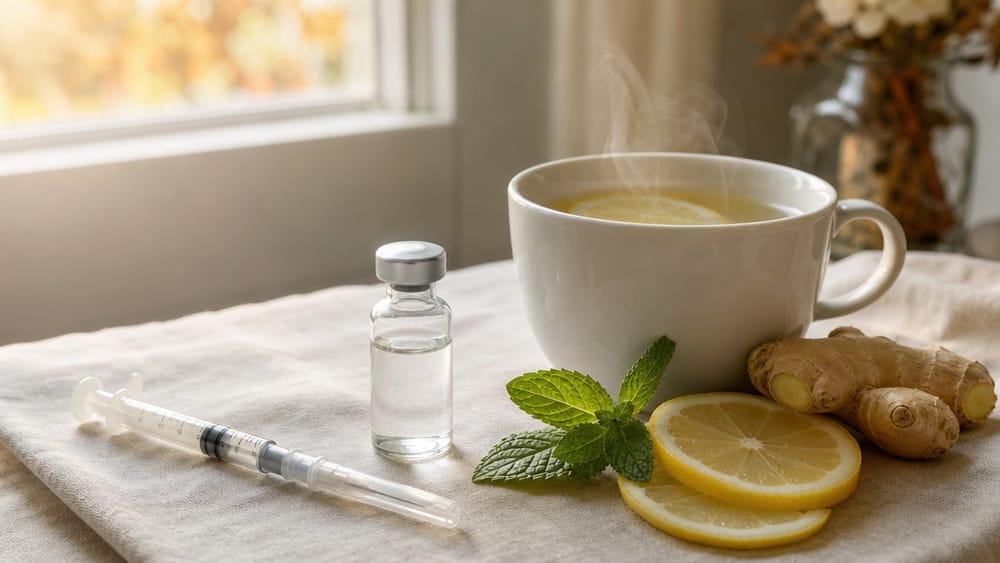
Let's be clear: no food prevents the flu or replaces the vaccine. Not bread, not tea, not any supplement, and not our products. The cup of ginger and lemon in this article's photo soothes a throat; it doesn't vaccinate anyone. Prevention here starts at a clinic or health centre, not at a store.
What we can help with is one small part of the sick-day plan doctors recommend for people with diabetes: having simple food with known ingredients at home that won't scramble your readings when you have no energy to cook. Many of our customers in Riyadh find it easier to keep low-carb bread in the freezer, along with sugar-free keto granola or light crackers, for the heavy days. Bakery 8 / مخبز ثمانية products are made with almond flour, with no added sugar and no gluten. But keep the order right: vaccine first, then the plan, then the pantry.
Frequently Asked Questions About the Flu Vaccine
Do I need a flu shot every year if I had one last year?
Yes. CDC gives two reasons: influenza viruses keep changing, so vaccine composition is reviewed every year, and immune protection declines over time. In WHO's recommendation for the 2026–2027 northern hemisphere season, the reference virus changed for all three components of the trivalent vaccine compared with the previous season.
How long does the flu vaccine take to work?
According to CDC, antibodies develop about two weeks after vaccination, so earlier in the season is better; CDC considers September and October good times in the northern hemisphere. In Saudi Arabia, the Ministry of Health began offering this season's vaccine on 16 September 2026, bookable through the Sehhaty app.
Is the flu vaccine safe for people with diabetes?
CDC recommends the injectable flu shot for people with diabetes, because they face a higher risk of complications even when well controlled, and says they should generally not receive the live nasal spray vaccine. Saudi Arabia's Ministry of Health lists people with chronic diseases among the groups most at risk. Discuss any special situation with your doctor.
Can the flu shot make me sick with the flu?
No. Mayo Clinic states the flu vaccine can't give you the flu. Some people get muscle aches or a mild fever for a day or two, which is an immune response, not an infection. People who fall ill after the shot have usually caught another virus or were infected before protection built up during the first two weeks.
Does the flu vaccine fully prevent infection?
Not always. Mayo Clinic reports protection against infection of 22% to 56% across seasons since 2009. But CDC cites a 2021 study linking vaccination to a 26% lower risk of ICU admission and a 31% lower risk of death from flu among adults, so its biggest value lies in lowering the odds of the worst outcomes.
The Bottom Line
The seasonal flu vaccine isn't a certificate you earn once; it's a yearly appointment with a moving target. The virus changes, your protection fades, and the vaccine is redesigned to keep up with both. If you live with diabetes or heart disease, or you're over 50, you pay more for that gap than most. Book your appointment in Sehhaty this week and ask your doctor about your sick-day plan. Then, if you like, stock your calm pantry from Bakery 8.
References
- World Health Organization. Influenza (seasonal) — Fact sheet. 28 February 2025.
- World Health Organization. Recommendations for influenza vaccine composition for the 2026–2027 northern hemisphere season. 27 February 2026.
- World Health Organization. Recommendations announced for influenza vaccine composition for the 2025–2026 northern hemisphere influenza season. 28 February 2025.
- Centers for Disease Control and Prevention (CDC). Key Facts About Seasonal Flu Vaccine. Page updated 1 September 2026.
- Centers for Disease Control and Prevention (CDC). Flu and People with Diabetes. Reviewed 9 June 2026.
- Centers for Disease Control and Prevention (CDC). Flu and Heart Disease and Stroke (citing Kwong et al., NEJM 2018). Reviewed 18 September 2025.
- Centers for Disease Control and Prevention (CDC). Signs and Symptoms of Flu. Reviewed 26 August 2024.
- Mayo Clinic Staff. Flu shot: Your best bet for avoiding influenza. Mayo Clinic.
- Saudi Ministry of Health via Saudi Press Agency (SPA). Ministry of Health announces the start of seasonal influenza vaccination with appointments via the Sehhaty app. 16 September 2026.
- Alnaheelah IM, Awadalla NJ, Al-Musa KM, Alsabaani AA, Mahfouz AA. Influenza Vaccination in Type 2 Diabetes Patients: Coverage Status and Its Determinants in Southwestern Saudi Arabia. Int J Environ Res Public Health. 2018;15(7):1381.
- Javed NB, AL-Mohaithef M. Socio-demographic determinants of influenza vaccination uptake behavior. Saudi Med J. 2023;44(11):1132–1138.
Related keywords: flu vaccine, seasonal flu shot, flu vaccine for diabetics, flu shot Saudi Arabia Sehhaty, can the flu shot give you the flu, flu and heart attack risk.