

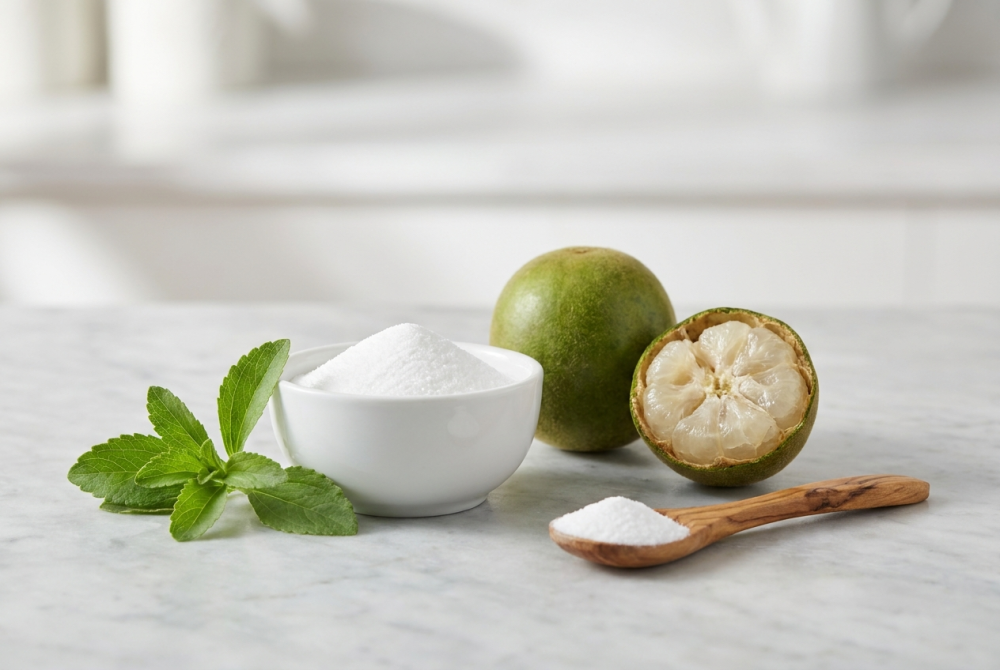
Sugar substitutes are sweeteners that give your food the sweet taste you love with very few calories — or none — and without the sharp blood-sugar spike that table sugar causes. In short, they are a practical way to cut added sugar without giving up sweetness.
For people with diabetes, keto and low-carb dieters, and anyone watching their weight, choosing the right sugar substitute can be the difference between a treat that disrupts blood sugar and one that fits your health goals. In this guide from Bakery 8 / مخبز ثمانية in Riyadh, Saudi Arabia, we explain the main types of sugar substitutes — stevia, monk fruit, erythritol and others — how each affects your body, what credible scientific bodies say, and how to choose wisely.
🍃 What are sugar substitutes and why do so many people seek them?
Sugar substitutes (sweeteners) are substances that add sweetness to food and drink for a tiny fraction of sugar's calories, or none at all. Some are extracted from plants such as the stevia leaf and monk fruit; others are made in the lab; and a third group belongs to the "sugar alcohol" family.
The reason for their popularity is clear: excess added sugar is linked to weight gain, obesity, and a higher risk of type 2 diabetes and heart disease. So many people look for a way to keep the sweet taste and reduce the harm. Sugar substitutes are not a "health food" in themselves, but they are a tool that helps lower sugar — especially for those managing high blood sugar.
How are sugar substitutes classified? Two main types
To understand the topic clearly, it helps to know that most sugar substitutes fall into two categories that differ in composition and effect:
1) Non-sugar sweeteners (high-intensity sweeteners)
These are intensely sweet substances used in tiny amounts because they are hundreds of times sweeter than sugar. This group includes stevia and monk fruit (both plant-based), plus manufactured sweeteners such as sucralose, aspartame, acesulfame potassium and saccharin. Most contain negligible calories and do not meaningfully raise blood sugar.
2) Sugar alcohols (polyols)
These are compounds such as erythritol, xylitol, sorbitol and maltitol. The name may suggest alcohol, but they have nothing to do with intoxicating alcohol — it is simply a chemical term for their structure. They provide less sweetness than high-intensity sweeteners, contain few calories, and affect blood sugar far less than table sugar. Importantly, the World Health Organization excluded sugar alcohols from its guidance on non-sugar sweeteners, meaning they are a separate category with their own considerations.
🌱 Stevia: the most popular plant-based option
Stevia is a natural sweetener extracted from the leaves of the Stevia rebaudiana plant, and the compounds responsible for its sweetness are called "steviol glycosides." According to the U.S. Food and Drug Administration (FDA), high-purity stevia is about 200 to 400 times sweeter than sugar, is virtually calorie-free, and does not meaningfully raise blood sugar.
On safety, the FDA has granted high-purity steviol glycosides "Generally Recognized As Safe" (GRAS) status. In 2010, the European Food Safety Authority (EFSA) evaluated stevia and set an Acceptable Daily Intake of 4 mg per kilogram of body weight per day, concluding it is neither carcinogenic nor genotoxic within that limit.
An often-overlooked point: the FDA considers only high-purity extracts safe; whole stevia leaf and crude, unrefined extracts are not on the "generally safe" list. So read the label and look for wording that indicates purity.
- Stevia: plant-based, 200–400x sweeter than sugar, essentially zero calories, and a very small effect on blood sugar.
- Taste note: some varieties leave a mild bitter aftertaste that varies by product and by person.
🍐 Monk fruit (luo han guo)
Monk fruit sweetener is extracted from an Asian fruit known as "luo han guo" (Siraitia grosvenorii), and its sweetness comes from compounds called "mogrosides." The FDA describes it as about 100 to 250 times sweeter than sugar, calorie-free, and classified as GRAS.
What distinguishes monk fruit is that it does not practically raise blood sugar, making it a favorite among people with diabetes and keto followers, and it often lacks the bitter aftertaste that can appear with some stevia products. According to Cleveland Clinic, being "generally recognized as safe" does not mean you should overdo it — moderation remains the rule.
Note an important practical detail: many products labeled "monk fruit" or "stevia" are in fact blended with erythritol or other sweeteners to make them easier to cook with. So read the full ingredient list, and do not assume the package contains a single ingredient.
❄️ Erythritol: the baking favorite — and what's new in the research?
Erythritol is a sugar alcohol that occurs naturally in small amounts in some fruits and fermented foods, but is produced industrially for use as a sweetener. It is very low in calories and has a minimal effect on blood sugar, which is why it is widely used in sugar-free baked goods and sweets — it gives a texture and sweetness close to sugar.
But recent years have brought research that warrants attention without alarm. A study published in Nature Medicine in 2023, led by Dr. Stanley Hazen and involving about 4,000 people in the U.S. and Europe, found that people with the highest blood erythritol levels (top quarter) were about twice as likely to experience cardiovascular events over three years compared with those in the lowest quarter. The researchers themselves stressed that these findings are associational, not proof of causation, and that more in-depth studies are needed.
For its part, Mayo Clinic advises caution and reducing erythritol "until clearer evidence is available," while focusing on cutting added sugars overall and favoring whole fruit. The balanced takeaway: erythritol is still authorized, the evidence is still evolving, and moderation is the wise approach — and if you have a heart condition, consult your doctor.
- Erythritol: a sugar alcohol, very low in calories, with a minimal effect on blood sugar.
- What's new: a 2023 study linked higher blood levels to more cardiovascular events (association, not confirmed causation).
- Digestive note: overdoing sugar alcohols generally can cause bloating or digestive upset in some people.
Sucralose, aspartame and acesulfame: a quick look
Alongside plant-based sweeteners, there are FDA-approved manufactured sweeteners used widely around the world:
- Sucralose: about 600x sweeter than sugar, calorie-free, FDA-approved.
- Aspartame: about 200x sweeter; it contains calories, but the amount used is tiny; FDA-approved.
- Acesulfame potassium (Ace-K): about 200x sweeter, calorie-free, FDA-approved.
- Saccharin: about 200 to 700x sweeter, calorie-free, FDA-approved.
These sweeteners are safe within the acceptable daily intake limits set by regulators, but many people prefer plant-based options such as stevia and monk fruit for reasons of natural sourcing and personal taste.
Do sugar substitutes raise blood sugar or insulin?
The direct answer: most high-intensity sweeteners (such as stevia and monk fruit) and erythritol do not meaningfully raise blood sugar, which is why many are described as having a glycemic index near zero. That makes them a useful tool for enjoying sweetness without the sharp blood-sugar "spike" caused by table sugar. For a deeper understanding of how foods affect your blood sugar, see our guide on the gluten-free lifestyle and blood-sugar-friendly eating.
But this is not an "open license" to pile on sweets. A product may be sugar-free yet still contain fats, other carbohydrates and calories. The golden rule: sugar substitutes help you cut sugar, but they do not cancel the importance of moderating total quantity.
What did the World Health Organization say in 2023?
In May 2023, the World Health Organization (WHO) issued guidance advising against using non-sugar sweeteners for weight control or to prevent noncommunicable diseases, based on evidence that their use does not confer long-term benefit in reducing body fat in adults or children. The guidance covered sweeteners such as acesulfame K, aspartame, sucralose and stevia.
But this guidance must be read carefully. First, it was classified as a "conditional" recommendation due to limited evidence and possible confounding. Second, the WHO explicitly excluded people already living with diabetes, and also excluded sugar alcohols from its scope. In other words, the core message is: do not rely on sweeteners alone to lose weight, and it is better to reduce the habit of sweetness overall — which does not conflict with using sugar substitutes as a smart transitional step away from table sugar.
Sugar substitutes and diabetes: what it means for you
For someone with diabetes, sugar substitutes offer a chance to enjoy a sweet taste without the sharp glucose rise caused by regular sugar. Stevia and monk fruit are popular choices because they do not practically raise blood sugar. Still, the following considerations matter:
- Watch the whole product, not just the sweetener; a "sugar-free" treat may contain carbs and fats that affect your readings.
- Do not stop or adjust your medication based on using sugar substitutes without consulting your doctor.
- Moderating sugar alcohols helps prevent digestive upset.
The general rule: sugar substitutes are a supportive tool within a balanced diet, not a cure. The best decision for your case remains between you and your doctor or dietitian.
💡 Practical tips for choosing and using sugar substitutes
- Read the full ingredient list: many packages are a blend of different sweeteners; know what you are actually consuming.
- Start with small amounts: high-intensity sweeteners are very sweet, and a little goes a long way. Overdoing it can create a metallic or bitter taste.
- Mind sugar alcohols if your stomach is sensitive: try small amounts first to assess your digestive tolerance.
- Don't compensate with quantity: a sugar-free treat is not a reason to double the portion; moderation first.
- Gradually reduce your sweetness habit: the long-term goal is a palate less dependent on intense sweetness.
- Choose trusted products: brands transparent about their ingredients that use approved sweeteners.
⚠️ Who should be careful?
Although approved sugar substitutes are considered safe within usual intake limits, some groups should approach them with care:
- People with a sensitive stomach or IBS: sugar alcohols (such as erythritol and maltitol) may cause bloating or gas when overconsumed.
- People with heart conditions: in light of the 2023 erythritol research, discuss your options with your doctor.
- Pregnant and breastfeeding women: moderation and a conversation with your doctor about what is best are advised.
- Children: consuming large amounts may exceed acceptable daily limits; moderation is essential.
Medical note: this article is for awareness and education only and is not a substitute for medical advice. If you have diabetes or any health condition, consult your doctor or dietitian before making major changes to your diet.
🥐 Sugar substitutes in your kitchen with Bakery 8
At Bakery 8 / مخبز ثمانية, our idea was built on a simple principle: you can enjoy baked goods and sweets with no added sugar and no refined white flour. We rely on sugar-free recipes and low-carb almond flour to deliver a delicious taste that fits the goals of people with diabetes, keto followers and low-carb eaters.
If you want to put what you read above into practice, here are some starting points:
- Begin your day with a low-carb healthy bread option instead of white bread, to avoid the morning sugar spike.
- Enjoy a crunchy snack of keto granola or crackers instead of sugar-sweetened snacks.
- When you crave something sweet, choose from sugar-free sweets and chocolate instead of options loaded with white sugar.
The idea is not "unlimited treats," but a taste you love with smarter choices for your blood sugar and weight.
❓ Frequently asked questions
What is the best sugar substitute for people with diabetes?
There is no single "best" for everyone, but stevia and monk fruit are among the most suitable options because they are plant-based, calorie-free and do not practically raise blood sugar. The best fit depends on your taste, your digestive tolerance and your doctor's advice.
Do sugar substitutes raise blood sugar?
Most high-intensity sweeteners like stevia and monk fruit, as well as erythritol, do not meaningfully raise blood sugar. But watch the whole product, as it may contain other carbohydrates that affect your readings despite being sugar-free.
Is erythritol safe?
Erythritol is still authorized, but a 2023 study in Nature Medicine linked higher blood levels to more cardiovascular events without proving causation. Mayo Clinic advises moderation until clearer evidence is available, and you should consult your doctor if you have a heart condition.
What is the difference between stevia and monk fruit?
Both are plant-based, calorie-free and do not raise blood sugar. The main difference is taste: some stevia products can leave a mild bitterness, while monk fruit tends to have a cleaner taste. Choosing between them is largely a matter of personal preference.
Does "sugar-free" mean calorie-free?
No. "Sugar-free" means no added sugar, but the product may contain fats, carbohydrates and calories from other ingredients. Always read the label, and practice moderation in quantity.
Do sugar substitutes help with weight loss?
They may help cut calories when they replace sugar, but the World Health Organization noted they do not provide long-term weight-loss benefit on their own. It is better to integrate them into a balanced diet and reduce reliance on sweetness overall.
Conclusion
Sugar substitutes are a smart tool for cutting added sugar and enjoying sweetness without sharp blood-sugar spikes, especially for people with diabetes and keto followers. Stevia and monk fruit are plant-based options with a strong safety record, while erythritol deserves attention and continued research. Remember that the deeper goal is to reduce reliance on intense sweetness and to moderate quantity.
And if you want to start practically, make your first step simple: swap one sugar-loaded item for a sugar-free option. Browse Bakery 8's sugar-free, low-carb baked goods and begin your journey toward "healthy and delicious" with a single step today.
References
- World Health Organization (WHO). "WHO advises not to use non-sugar sweeteners for weight control in newly released guideline." 15 May 2023.
- Witkowski M., et al. "The artificial sweetener erythritol and cardiovascular event risk." Nature Medicine, 2023 (via NIH Research Matters).
- U.S. Food and Drug Administration (FDA). "Aspartame and Other Sweeteners in Food."
- European Food Safety Authority (EFSA). "EFSA evaluates the safety of steviol glycosides," 2010.
- Harvard T.H. Chan School of Public Health — The Nutrition Source. "Unpacking the WHO guidelines on non-sugar sweeteners," 2023.
- Mayo Clinic. "Is erythritol a safe and healthy sugar substitute?"
- Cleveland Clinic. "Is Monk Fruit a Healthy Sweetener?"
Related keywords: sugar substitutes, natural sweeteners, stevia, monk fruit sweetener, erythritol, sugar substitutes for diabetics, keto sweeteners, sugar-free, low-carb, zero-calorie sweeteners.