

What Actually Changes in Your Body When You Travel
Travel doesn't just test your willpower — it changes three measurable things: how your taste receptors work inside a pressurised cabin, when your metabolic clock runs (it follows your meals, not your wristwatch), and where your food comes from, which moves from your kitchen to one whose standards you cannot see. That is why "I'll be careful on vacation" so often fails. The problem isn't discipline; the rules of the game have changed. This article walks through what credible medical sources actually say about each of those changes, and the small number of decisions that make a real difference on a trip.
We are Bakery 8 (مخبز ثمانية) in Riyadh, Saudi Arabia, and this is educational content only. Nothing here is a diagnosis or a treatment plan, and any decision involving a medication or a medical condition belongs with your doctor.
The Short Version, in Six Points
- Low cabin pressure blunts your perception of salt and sugar, so travel food is made saltier and sweeter to compensate.
- Delaying your meals delays your blood glucose rhythm by more than five hours — while the master clock in your brain does not move at all.
- The biggest food risk in travel isn't calories, it's contamination: travellers' diarrhoea affects 30% to 70% of travellers over a two-week period.
- Sitting still for more than four hours roughly doubles venous thromboembolism risk, and the risk stays elevated for about four weeks.
- The average weight gained on a single vacation can equal three-quarters of what a person gains in a whole year.
- In a Saudi study of 772 participants, 76.8% had never had a pre-travel health consultation.
1. The Plane Changes How Food Tastes Before It Changes Your Appetite
Start with the environment. The US Federal Aviation Administration "requires that commercial aircraft maintain a cabin pressure equivalent to a maximum altitude of 2,440 m (approximately 8,000 ft)," and in practice "cabin pressures are typically maintained at an equivalent of 1,830–2,440 m (approximately 6,000–8,000 ft)." Meanwhile, "aircraft cabin air is typically dry, usually 10–20% humidity, which can cause dryness of the mucous membranes," according to the CDC Yellow Book.
What does that do to taste?
Researchers at Germany's Fraunhofer Institute for Building Physics (IBP) ran taste trials inside a simulated aircraft cabin and found that salt is perceived to be between 20 and 30 percent less intense, and sugar 15 to 20 percent less intense. The proposed mechanism is twofold: reduced cabin pressure means "oxygen saturation in the blood is reduced, thus also reducing the effectiveness of the olfactory and taste receptors," layered on top of a psychological effect that raises stimulus thresholds in an unfamiliar environment. Notably, "the perception of fruity aromas and acids is by contrast more stable."
Why that number matters
It reverses the usual conclusion. When airline food tastes flat and you reach for something sweeter or saltier, that is not a character flaw — your receptors are working less efficiently. And airline catering kitchens know this, which is why in-flight meals are seasoned and sweetened more heavily. The meal that feels "normal" at altitude carries a bigger salt and sugar load than you'd guess — as you'd notice immediately if you ate the same meal on the ground. Our article on sodium and salt covers where that hidden salt usually comes from.
The practical move: instead of chasing the sweetness you can't taste, pick foods whose flavour rests on acidity and aroma — cucumber and tomato, cheese, nuts, herbs, lemon — because those survive altitude. Better still, bring your own food rather than depending on what's offered.
2. Your Metabolic Clock Follows Your Meals, Not Your Watch
This is the most important idea in the article, and the least widely known. In a 2017 study published in Current Biology from the University of Surrey (Wehrens and colleagues), ten healthy young men followed a protocol in which meals were delayed by five hours for six days. The result: their blood glucose rhythm shifted later by more than five hours on average — while melatonin and cortisol rhythms and clock-gene expression in blood did not change, meaning the master clock in the brain stayed where it was. In fat tissue, the PER2 gene's rhythm shifted by roughly one hour.
What that means in practice
Your body can effectively split in two: your brain on one time zone, your metabolism on another. That is precisely what happens when you land somewhere new and keep eating on home time. The researchers concluded that people with circadian rhythm disorders, "including shift workers and those on long-haul flights, might consider timed meals as part of an overall strategy to help resynchronize their body clocks."
And jet lag itself?
The CDC defines jet lag disorder as insomnia or excessive daytime sleepiness "accompanied by a reduction of total sleep time, associated with trans-meridian travel across at least two time zones," with an "average rate of adaptation of 1.5 hrs/day for westward travel and 1 hr/day for eastward travel" — eastward is the harder direction. Light is the strongest lever: "Exposure to bright light in the morning following the circadian nadir (approximately 2–4 hours prior to habitual wake time) promotes phase advances, while exposure in the evening generally promotes phase delays." On supplements, "melatonin dosages vary, but 0.5–1 mg is often sufficient to produce a circadian shift. It is not recommended to take high-dose melatonin (>5mg)" — a conversation for your doctor or pharmacist, not a decision to take from an article.
And note what Mayo Clinic lists among jet lag symptoms: "Stomach problems such as constipation or diarrhea." Your digestive system is jet-lagged too — which is no coincidence once you know about peripheral clocks.
The practical move: switch to destination meal times from day one, even if you aren't quite hungry. Breakfast at the destination's breakfast hour, combined with morning daylight, does far more than simply trying to "sleep early."
3. The Biggest Food Risk in Travel Isn't Calories — It's Contamination
This is the part most "healthy travel eating" articles skip. According to the CDC Yellow Book 2026, travellers' diarrhoea "attack rates range from 30% to 70% of travelers during a 2-week period, depending on the destination and season of travel." Bacteria cause 75–90% of cases; viruses account for 10–25%.
The famous rule — and its honest limit
"Boil it, cook it, peel it, or forget it" is useful but it is not a guarantee. The guidance says so plainly: "Studies have found that people who follow these rules can still become ill. Poor hygiene practices in local restaurants and underlying hygiene and sanitation infrastructure deficiencies are likely the largest contributors to the risk." In other words, part of the risk is entirely outside your control — which is one more reason to control the part that isn't.
What actually lowers the risk
- Thoroughly cooked food served hot — "fully cooked foods that are served hot and foods that travelers carefully prepare themselves are safest."
- Fruit you peel yourself — "safest when rinsed with safe water and peeled by the person who eats them."
- Avoid raw items — "salads, uncooked vegetables, raw and unpeeled fruits, and unpasteurized fruit juices," plus raw or undercooked meat, fish, shellfish and eggs.
- Water — "use only commercially bottled water from an unopened, factory-sealed container," and remember that tap water "might be unsafe for drinking, preparing food and beverages, making ice, cooking, and brushing teeth."
- Ice — avoid it unless you are reasonably certain it was made with safe water.
- Street vendors — "consumption of food and beverages obtained from street vendors increases the risk of illness."
- Hands — where soap and water aren't available, "small containers of hand sanitizer containing ≥60% alcohol can make it easier for travelers to clean their hands before eating."
The World Health Organization compresses all of this into its Five Keys to Safer Food: keep clean; separate raw and cooked; cook thoroughly; keep food at safe temperatures; use safe water and raw materials. WHO estimates that unsafe food causes 866 million illnesses and 1.5 million deaths annually.
If you do get sick
Rehydration is the centre of gravity: packaged oral rehydration salts added to boiled or treated water, and for mild cases "rehydration can be maintained with any preferred liquid." On preventive antibiotics the guidance is unambiguous: "For almost all travelers, the risks associated with the use of prophylactic antibiotics…do not outweigh the benefits." Antibiotics are reserved for moderate-to-severe illness and are a clinical decision. If diarrhoea persists after you get home, or comes with blood, fever or clear dehydration, that is a medical visit, not a waiting game. For everyday digestive symptoms, see our article on bloating and gas.
4. Sitting Still: The Risk You Can't Feel
Under the WHO's WRIGHT project, the finding was that "the risk of developing venous thromboembolism (VTE) approximately doubles after travel lasting four hours or more." WHO also keeps the scale honest: "the absolute risk of developing VTE, if seated and immobile for more than four hours, remains relatively low at about 1 in 6000."
Two points deserve attention anyway. First, "the risk of VTE does not go away completely after a flight is over, and the risk remains elevated for about four weeks" — so calf pain two weeks after you land is worth taking seriously. Second, the risk is not evenly distributed. WHO identified "obesity, being very tall or very short (taller than 1.9 meters or shorter than 1.6 meters), use of oral contraceptives, and inherited blood disorders leading to increased clotting tendency."
What helps: "blood circulation can be promoted by exercising the calf muscles with up-and-down movements of the feet at the ankle joints," along with avoiding tight clothing that promotes blood stagnation. WHO adds that "individuals with questions regarding prevention of VTE should consult their physicians before travelling." The Aerospace Medical Association, as cited by the CDC, recommends "evaluating chronic medical conditions and addressing instabilities prior to travel, particularly in people with underlying cardiovascular disease, diabetes, chronic lung disease, mental illness, seizures, stroke, recent surgery, or a history of deep vein thrombosis or pulmonary embolism."
5. Vacation Weight Doesn't Come Off by Itself
In a prospective study by Cooper and Tokar published in Physiology & Behavior in 2016, 122 adults aged 18–65 were followed through vacations lasting one to three weeks. The average gain was 0.7 pounds during the vacation and 0.9 pounds across the whole study period, with 61 percent of participants gaining weight and some gaining as much as seven pounds.
The number looks trivial until you put it in context, which is exactly what lead researcher Jamie Cooper did: "If you're only gaining a pound or two a year and you gained three-quarters of that on a one- to three-week vacation, that's a pretty substantial weight gain during a short period of time." That is the idea behind "creeping obesity" — the common pattern of adults gaining small amounts of weight over long periods, leading to health problems later.
Let's be fair about this: one holiday ruins nobody's health, and anxious eating on a trip is not a health goal. The point is simply that the annual arithmetic — not the week itself — is what deserves attention.
6. Travelling With Diabetes: The Decisions Happen Before the Trip
If you use insulin or glucose-lowering medication, your most important travel decisions are made in a clinic, not at the airport. From Diabetes UK: "Always carry insulin, other diabetes medication, device spares, hypo treatments and other diabetes supplies in hand luggage," because being in the hold "can damage it as it's so cold and luggage can be lost." The guidance also advises taking "two to three times the amount of insulin or other diabetes medication and equipment you'd normally use," plus a letter from your healthcare team stating that you have diabetes and need to carry medical supplies, hypo treatments, and "extra snacks in case of delays like nuts, fruit or a sandwich."
Dose adjustment across time zones is not an article's decision: "Speak to your healthcare team for advice about adjusting your insulin doses." The general principle is that eastward travel shortens the day (potentially reducing requirements) while westward travel lengthens it (potentially increasing them) — but translating that into numbers depends on your specific regimen. In flight and in different climates, "monitor your blood sugar levels frequently and be prepared to make changes to your dosage."
7. The Saudi Gap Isn't Knowledge — It's an Appointment
In a Saudi cross-sectional study published in 2024 in Tropical Diseases, Travel Medicine and Vaccines, covering 772 participants at the Family and Community Medicine Center of Imam Abdulrahman Bin Faisal University in the Eastern Province, only 23.2% had ever received a pre-travel health consultation, while 76.8% never had. The leading reason for not seeking one was perceived low risk (75.0%), followed by lack of awareness (36.3%), time constraints (21.6%) and cost (15.5%). The authors concluded that "the low prevalence of pre-travel health consultations among travelers highlights the need for targeted educational campaigns and the integration of travel health services into primary healthcare."
The message is more reassuring than it first sounds: the biggest available health gain in travel isn't obscure knowledge — it's a short appointment before you go, especially if you have a chronic condition, are heading somewhere that needs vaccinations, or are planning a long trip. With travel a fixture of the Saudi summer — alongside domestic tourism of roughly 93.3 million domestic tourists in 2025 per Saudi data — that appointment earns its place on the packing list.
A Seven-Step Practical Plan
- Two weeks out: a short appointment with your doctor if you have diabetes, hypertension, another chronic condition or a clotting history — and to review any vaccinations your destination needs.
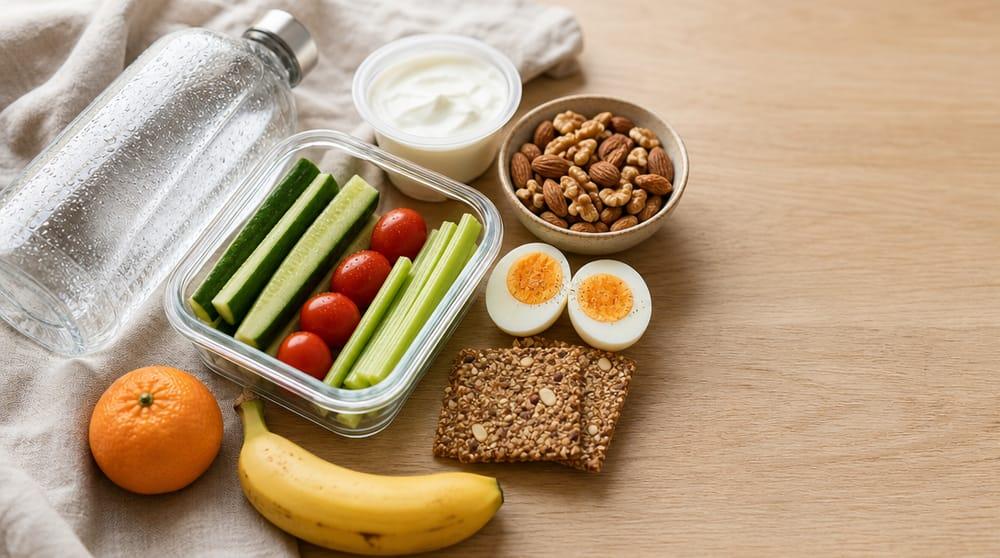
- The day before: pack a small food bag — unsweetened nuts, boiled eggs, cut vegetables, cheese, low-carb crackers — so airport options don't decide for you.
- In hand luggage: all medication, hypo treatment if you're on insulin, a medical letter, and hand sanitiser with ≥60% alcohol.
- On board: move your ankles up and down every hour, stand and walk when you can, and skip tight clothing.
- At altitude: don't chase the sweetness you can't taste; choose foods built on acidity and aroma, and drink water steadily — cabin humidity is only 10–20%.
- On arrival: move your meal times to destination time immediately, and get into natural daylight in the morning.
- Throughout: make your rule "hot and cooked, peeled by your own hand, or factory-sealed" — and skip ice of unknown origin.
Who Should Be Extra Careful
- People with diabetes, especially on insulin — time-zone dose adjustment is a medical decision.
- Anyone with a history of deep vein thrombosis or pulmonary embolism, an inherited clotting disorder, or recent surgery.
- Pregnant travellers and those using oral contraceptives.
- People with cardiovascular disease, chronic lung disease or anaemia — reduced cabin pressure can worsen their condition.
- People with coeliac disease or a confirmed food allergy — controlling food abroad is far harder.
- Children and older adults — more vulnerable to complications of dehydration after diarrhoea.
Talk to your doctor before changing any medication or dose, starting any supplement (melatonin included), or if worrying symptoms appear during or after travel. This article is educational and does not replace medical advice.
Where Bakery 8 Fits Into This
No bread cancels jet lag, and no food product prevents a blood clot or travellers' diarrhoea. But there is one practical truth worth stating honestly: the food you bring with you is the only part of your trip's food whose ingredients you know for certain. That matters most for anyone following a low-carb or sugar-free pattern, and for anyone with coeliac disease or wheat sensitivity, because finding a reliable gluten-free option in an unfamiliar destination is the hardest part of the trip.
That's why our products work as a packing decision: crackers and keto granola are easy to carry and hold up over a long day, and samoli bread gives you a familiar travel sandwich without the sugar spike. All of them are free of added sugar, white flour and gluten. And we'll say it plainly: none of this is a treatment or medical protection — it is simply food you know, on a trip where you know very little else.
Frequently Asked Questions
Why do so many people crave juice and sweets on a plane?
Because reduced cabin pressure blunts sweetness perception by 15 to 20 percent and saltiness by 20 to 30 percent, according to Fraunhofer Institute trials. Food tastes flat, so you reach for more flavour. The fix isn't resisting the urge — it's choosing foods built on acidity and aroma, since those perceptions stay more stable at altitude.
Does shifting meal times really help with jet lag?
Evidence suggests meal timing moves your peripheral metabolic clocks: delaying meals by five hours delayed the blood glucose rhythm by more than five hours without moving the master clock in the brain. Researchers therefore suggest treating timed meals as part of an overall resynchronisation strategy, alongside light exposure, which remains the strongest lever.
How long a flight before clot risk begins?
WHO's WRIGHT project found that venous thromboembolism risk roughly doubles after travel lasting four hours or more, while the absolute risk stays relatively low at about 1 in 6000. The risk remains elevated for roughly four weeks after the trip, so pay attention to any leg pain or swelling in that window.
Is cooked food really safer than salad when travelling?
Yes, according to CDC travel guidance: fully cooked foods served hot are safest, while salads, uncooked vegetables, unpeeled fruit and unpasteurised dairy carry higher risk. That said, the same guidance is clear that following these rules does not always prevent illness, because the establishment's own hygiene is a large factor.
Do I need a medical consultation before every trip?
Not for every trip, but the gap is wide: in a Saudi study of 772 participants, 76.8% had never had a pre-travel consultation, and the top reason was perceived low risk. A consultation matters most if you have a chronic illness, are pregnant, have a clotting history, or your destination requires vaccinations or malaria prophylaxis.
References
- Centers for Disease Control and Prevention — CDC Yellow Book 2026: Travelers' Diarrhea.
- Centers for Disease Control and Prevention — CDC Yellow Book: Food and Water Precautions for Travelers.
- Centers for Disease Control and Prevention — CDC Yellow Book: Air Travel (cabin pressurization and humidity).
- Centers for Disease Control and Prevention — CDC Yellow Book 2026: Jet Lag Disorder.
- World Health Organization — Study results released on travel and blood clots (WRIGHT project), 2007.
- World Health Organization — Five Keys to Safer Food / Promoting safe food handling.
- Fraunhofer Institute for Building Physics (IBP) — Everything tastes different in the air: the effects on the taste experience in the aircraft cabin.
- Wehrens SMT, Christou S, Isherwood C, et al. Meal Timing Regulates the Human Circadian System. Current Biology, 2017 (University of Surrey).
- Mayo Clinic — Jet lag disorder: symptoms and causes.
- Cooper JA, Tokar T. A prospective study on vacation weight gain in adults. Physiology & Behavior, 2016.
- Diabetes UK — Travelling with diabetes.
- Exploring the utilization and perceptions of pre-travel health consultations in primary care settings in Saudi Arabia: a cross-sectional study. Tropical Diseases, Travel Medicine and Vaccines, 2024.
- Aerospace Medical Association — pre-flight evaluation recommendations (as cited in CDC Yellow Book, Air Travel).
- DataSaudi / General Authority for Statistics — Tourism statistics, 2025.
Related keywords: nutrition while traveling, healthy eating on a plane, jet lag and meal timing, travelers' diarrhea prevention, DVT on long flights, travelling with diabetes, healthy travel snacks, food safety for travelers, pre-travel health consultation.