

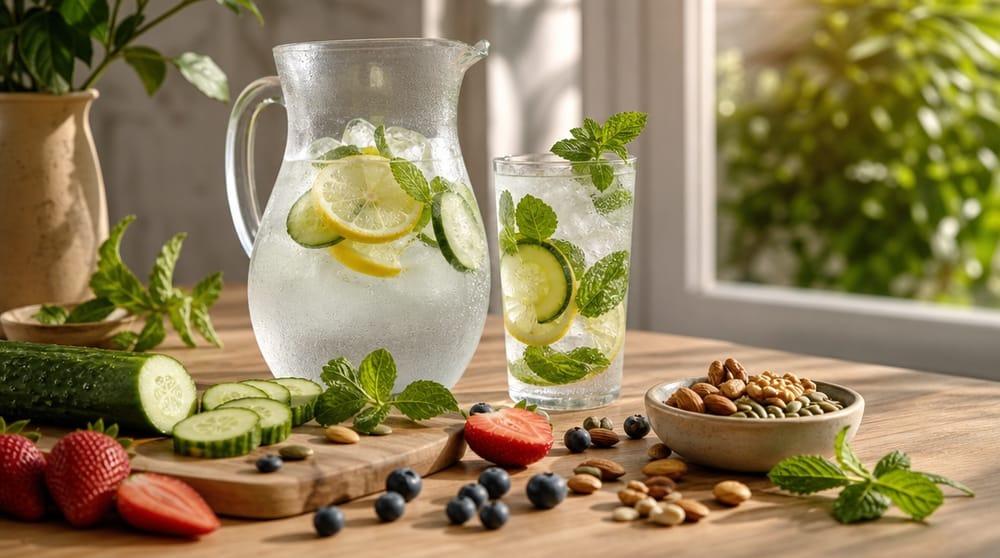
In the peak of summer heat, water does far more than quench thirst — good hydration is one of the simplest and most overlooked tools for keeping your blood sugar, energy, and focus stable. When you run low on water, blood sugar tends to rise: glucose becomes more concentrated in a smaller volume of fluid, and your body releases hormones that push the liver to pour out more sugar. In short, a well-timed glass of water can be a smart metabolic move, not just a refreshing habit — especially on scorching days in Riyadh.
This guide explains, in clear science backed by credible sources, how hydration connects to blood sugar and metabolism, how much water you actually need each day, why electrolytes matter in the heat, and what to drink versus avoid — with practical tips suited to the Saudi climate.
Why is hydration linked to blood sugar? 💧
Water makes up about 60% of body weight and is the medium in which nearly every metabolic reaction takes place. When your water level drops, the concentrations of dissolved substances in the blood — including glucose — shift, and so does the release of hormones that regulate fluids and blood sugar at the same time.
In a study published in Diabetes Care in 2011 that followed 3,615 adults for nine years, people who drank more water were less likely to develop new-onset high blood sugar. Compared with those drinking less than half a liter a day, the risk was lower in those drinking between half a liter and one liter (odds ratio 0.68). The researchers proposed that the explanation lies in a hormone called vasopressin.
How does dehydration raise blood sugar?
Two main mechanisms work together:
- Concentration: when there is less water in the circulation, the same amount of glucose sits in a smaller volume of fluid, so the blood sugar reading rises even without eating more sugar.
- Hormones: the body responds to dehydration by releasing vasopressin (the antidiuretic hormone), which prompts the liver to release stored glucose, and may also raise stress hormones such as cortisol — both of which push blood sugar up.
Vasopressin and metabolism
Vasopressin conserves the body's water by reducing what the kidneys lose. But recent research — including a review published in Annals of Nutrition and Metabolism in 2018 — has linked a higher blood marker of it (copeptin) with greater risk of diabetes and kidney and heart problems. The good news is that drinking water regularly is the natural way to lower vasopressin, making adequate hydration a simple, free "lifestyle intervention" that supports long-term metabolic health.
Heat and blood sugar: the summer equation 🌡️
Extreme heat doubles the challenge. Sweating rapidly drains water and salts, the resulting dehydration raises blood sugar, and high blood sugar in turn increases urination and deepens dehydration — a vicious cycle flagged by the U.S. Centers for Disease Control and Prevention (CDC). The CDC also explains that high temperatures can change "how your body uses insulin," and that diabetes complications can impair sweat glands, making it harder for the body to cool down.
In practice, this means very hot Riyadh days call for extra attention to hydration for everyone, and especially for people with diabetes. The CDC's direct advice: "Drink plenty of water — even if you're not thirsty," because thirst is a late signal that appears only after dehydration has already begun.
There is another practical detail worth noting: heat can speed insulin absorption and change how your body responds to it, making blood sugar readings swing more, both up and down. So people with diabetes are advised to check their blood sugar before and after physical activity on hot days, carry a fast source to treat a low when needed, and keep insulin and medicines in a cool place away from direct sun inside the car. These simple steps make a big difference to safety through the Kingdom's long summer.
How much water do you need each day?
According to the National Academies (Institute of Medicine), total daily water needs are roughly:
- Adult men: about 3.7 liters (around 13 cups).
- Adult women: about 2.7 liters (around 9 cups).
But note an important detail: this figure is "total water," and about 20% of it comes from food (vegetables, fruit, soups), while 80% comes from beverages — including water, coffee, and tea. These numbers are estimates for moderate conditions; in summer heat, or with physical activity and sweating, your needs can rise significantly.
A simple hydration plan for a hot day
You don't need complex formulas; spread your water across the day instead of drinking it all at once:
- On waking: one to two glasses to replace what the body lost during sleep.
- With and between meals: a glass before eating and a glass during work or study breaks.
- Before heading out in the heat and right after: an extra glass, and more if sweating is heavy.
- Around exercise: a glass before, sips during, and a glass after to replace sweat.
- In the evening: ease off an hour or two before bed to avoid frequent waking.
Signs you are under-hydrated
Don't wait for thirst. Watch these simple markers:
- Urine color: very pale, lemonade-like yellow signals good hydration, while dark yellow means you need water.
- Dry mouth and lips, mild headache, and poor concentration.
- Fatigue, dizziness, and an unusually fast heartbeat, especially after heat exposure.
- Urinating less often than usual.
Electrolytes are not a minor detail 🧂
When you sweat you lose not only water but essential salts called electrolytes — chiefly sodium, potassium, and magnesium. These minerals regulate fluid balance, muscle contraction, and heartbeat, and a shortfall after heavy sweating can cause fatigue and muscle cramps even if you drink plenty of water. Nutrition guidelines recommend about 4.7 grams of potassium a day for adults, from natural sources such as leafy greens, avocado, and nuts.
Here is a point that matters for people on a low-carb or keto diet: when carbohydrates drop, insulin falls, so the kidneys excrete more sodium and water. These individuals may need extra care with salts and hydration — especially in summer — to avoid what is known as the "keto flu" (temporary fatigue and headache, usually caused by fluid and salt loss rather than the diet itself). The practical rule: alongside water, make sure you get a balanced source of natural salts, and consult your doctor if you follow a diet to manage your weight or blood sugar.
Water, the brain, and mental performance in the heat 🧠
The brain is among the body's most water-sensitive organs. Research indicates that losing as little as 1–2% of body water can be enough to affect mood, attention, short-term memory, and the sense of fatigue. In other words, you may feel sluggish and struggle to concentrate in the middle of a hot day before you even feel thirsty.
This matters especially for students, employees, and drivers during the summer months: a slight drop in hydration can be misread as hunger or a need for caffeine or sugar, so we reach for a sweetened drink that makes things worse. The simplest and cheapest fix is usually a glass of water. Keep a water bottle on your desk or in your car as a constant visual reminder.
Hydration, energy, and appetite
Even mild dehydration drains energy and focus, because the brain is highly sensitive to water balance. Good hydration not only supports alertness — it may also help regulate appetite.
In a study published in the journal Obesity in 2010, participants drank 500 milliliters of water before each meal as part of a low-calorie diet for 12 weeks, and lost about 44% more weight than those who did not drink water before eating. Part of the explanation is that water fills the stomach and boosts the feeling of fullness — and we sometimes confuse thirst with hunger, eating when the body only needs water. A glass of water before a meal is a simple habit that supports your food choices with zero calories.
What to drink and what to avoid in the heat
The drink you choose makes a big difference to your blood sugar and hydration:
- Water first: the ideal choice, with no calories and no sugar. Add slices of lemon, cucumber, or mint for a refreshing flavor that encourages you to drink more.
- Sugary drinks, juices, and sodas: spike blood sugar quickly and add empty calories. The World Health Organization recommends cutting free sugars to under 10% of total energy, ideally below 5%. A sweetened iced drink may look refreshing, but it worsens blood sugar swings and thirst.
- Energy and sports drinks: often loaded with sugar; you only need them for prolonged, intense physical activity that requires replacing salts.
- Coffee and tea: in moderation, they do not cause dehydration as is commonly believed. A study in PLOS ONE in 2014 found that drinking 4 cups of coffee a day provided hydration similar to water in habitual coffee drinkers. What matters most is not adding sugar.
Practical tips to stay hydrated in a Riyadh summer ✅
- Start your day with a glass of water, and keep a water bottle within reach all day.
- Don't wait for thirst; sip at regular intervals, and drink more on very hot days or when going out at midday.
- Have a glass before each meal, and one before, during, and after exercise.
- Eat more water-rich foods: cucumber, tomato, watermelon, strawberries, and lettuce.
- Check your urine color as a quick daily gauge of your hydration status.
- Limit direct sun exposure during peak hours, and wear light, loose clothing.
- Replace salts from natural sources after heavy sweating, especially if you follow a low-carb diet.
- Keep diabetes medicines and insulin away from heat and direct sunlight.
Who should be extra careful? ⚠️
Hydration matters for everyone, but some groups need extra care in the heat:
- People with diabetes: more prone to dehydration and blood sugar swings; monitoring readings more frequently on hot days is advised.
- Those taking diuretics or certain blood-pressure and diabetes medicines: may lose more fluid.
- Older adults and children: their thirst sense is weaker or slower, so they need regular reminders to drink.
- Athletes and outdoor workers: lose more water and salts and need planned replacement.
Important note: this article is for health awareness and education only and is not a substitute for medical advice. If you have diabetes, kidney or heart disease, or take chronic medications, consult your doctor about the right fluid intake for you and any adjustments to your medicines in summer.
Bakery 8: meals that support steady energy
Good hydration is part of a bigger picture: food that doesn't cause sharp blood sugar spikes, so your energy stays steady through a hot day. At Bakery 8 we make sugar-free, gluten-free keto baked goods from almond flour, designed to be a companion to a balanced lifestyle:
- Keto granola: a breakfast or snack rich in fiber, healthy fats, and nuts that gives you fullness and calm energy with no added sugar — a perfect partner to your morning glass of water.
- Samoli and cloud bread: low-carb alternatives to traditional bread that help you build a balanced meal that won't spike blood sugar.
- Crackers and manaqish: a light option for daytime breaks instead of sugary snacks that increase thirst and swing your energy.
For more nutrition awareness, see our articles on net carbs and how to count them and insulin resistance and how to reverse it.
Frequently asked questions
Does dehydration really raise blood sugar?
Yes. When water is low, glucose becomes more concentrated in the blood, and the body releases vasopressin, which prompts the liver to release stored sugar. So a blood sugar reading can rise with dehydration, and this is clearest in people with diabetes and on very hot days.
How many glasses of water do I need a day?
The estimated total is about 3.7 liters for men and 2.7 liters for women, including water from food and beverages. In summer heat and with physical activity, needs may rise. Your best personal guide is urine color: very pale yellow signals good hydration.
Do coffee and tea cause dehydration?
Not at usual amounts. Research shows that moderate coffee consumption provides hydration similar to water in habitual drinkers. The problem isn't the coffee but the added sugar; keep it unsweetened and rely on water as your main source.
Does drinking water help with weight loss?
It may help indirectly. Water has no calories, and a glass before a meal boosts fullness and may reduce how much you eat. In one study, those who drank water before meals lost more weight on a low-calorie diet. But it complements good eating habits rather than replacing them.
What is the best drink for hydration in the heat?
Water is best: no sugar, no calories. Add lemon or mint for a flavor that encourages you to drink. Avoid sugary and fizzy drinks because they raise blood sugar and increase thirst, and only reach for energy drinks during prolonged physical activity that requires replacing salts.
Can I drink too much water?
It rarely happens in healthy people because the kidneys manage the excess efficiently. But severe overdrinking in a short time can lower blood sodium. The fix is regular spacing across the day with salt replacement during heavy sweating. People with kidney or heart disease should follow their doctor's guidance on fluid amounts.
Conclusion
Hydration is a simple daily investment in your metabolic health: it keeps blood sugar stable, protects your energy and focus, and shields you from the risks of summer heat. Make water your first choice, watch your urine color, mind your salts after sweating, and give your body balanced food that doesn't swing your blood sugar. And with every glass of water, choose from Bakery 8 what completes your healthy picture: sugar-free, gluten-free keto baked goods — healthy and delicious.
References
- Roussel R, et al. Low Water Intake and Risk for New-Onset Hyperglycemia. Diabetes Care. 2011;34(12):2551–2554.
- Enhörning S, Melander O. The Vasopressin System in the Risk of Diabetes and Cardiorenal Disease, and Hydration as a Potential Lifestyle Intervention. Annals of Nutrition and Metabolism. 2018;72(Suppl 2):21–27.
- Centers for Disease Control and Prevention (CDC). Managing Diabetes in the Heat / Diabetes and Extreme Heat.
- Institute of Medicine (National Academies). Dietary Reference Intakes for Water, Potassium, Sodium, Chloride, and Sulfate. 2004/2005.
- Dennis EA, et al. Water Consumption Increases Weight Loss During a Hypocaloric Diet Intervention in Middle-aged and Older Adults. Obesity. 2010;18(2):300–307.
- Killer SC, Blannin AK, Jeukendrup AE. No Evidence of Dehydration with Moderate Daily Coffee Intake. PLOS ONE. 2014;9(1):e84154.
- World Health Organization (WHO). Guideline: Sugars Intake for Adults and Children. 2015.
- Harvard T.H. Chan School of Public Health — The Nutrition Source. Water.
- Mayo Clinic. Water: How Much Should You Drink Every Day? / Caffeine: Is It Dehydrating or Not?
Related keywords: hydration and blood sugar, drinking water in summer, dehydration and blood sugar, daily water intake, electrolytes and salts, hydration and keto, heat and diabetes, signs of dehydration.