

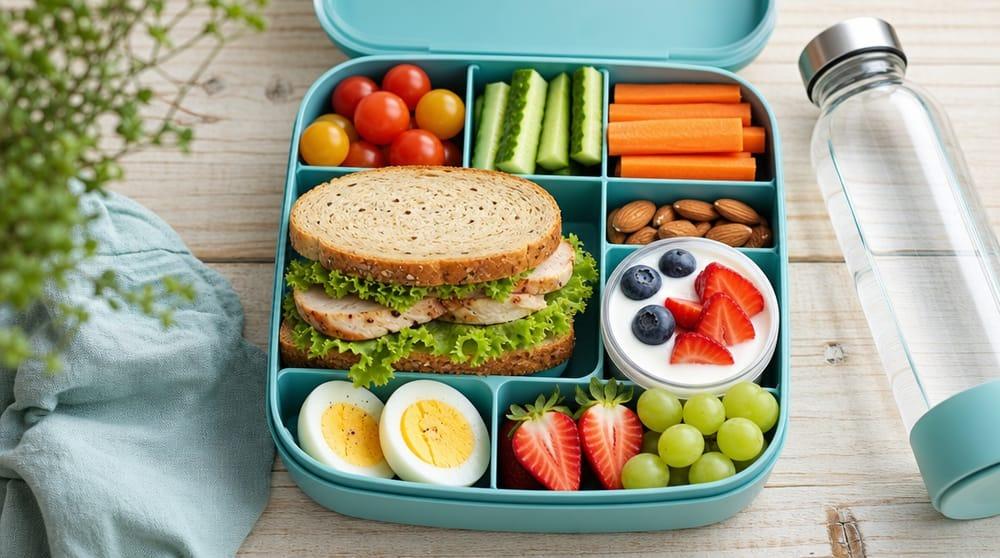
A healthy school lunchbox is a small, balanced meal that gives your child steady energy and sharp focus through the school day, without the sharp blood-sugar spikes and crashes that leave kids sluggish by mid-morning. The basic formula is simple: a protein source, plus a whole grain or low-carb alternative, plus vegetables and fruit, plus a little healthy fat, while keeping added sugar and refined white flour to a minimum. In this practical, back-to-school guide, we show you how to build a lunchbox your child loves and their body loves at the same time.
As the new school year approaches in Saudi Arabia, one question returns to every parent: what do I pack so my child eats well and stays active and focused until the last class? The answer does not require complicated recipes — just a simple understanding of what a growing body needs, and a few smart swaps for sugar and traditional white bread.
What actually makes a lunchbox "healthy"?
A healthy box is not just the absence of candy; it is the presence of the right elements in the right amounts. U.S. dietary guidance and the USDA's MyPlate framework recommend building a meal around five food groups: fruits, vegetables, grains (ideally at least half whole grains), protein, and dairy. When these come together in one meal, your child gets a mix of slow carbohydrates, protein, fiber, and healthy fat — the exact combination that delivers longer fullness and stable energy.
Our golden rule: picture the box as a divided plate. Half is vegetables and fruit, a quarter is a protein source, and the last quarter is a whole grain or low-carb alternative. Add a small serving of healthy fat (a few almonds or a slice of avocado) to boost satiety and vitamin absorption.
Why "slow" energy beats fast energy
When a child eats a meal heavy in sugar or white flour, blood sugar rises quickly then drops sharply an hour or two later — often showing up as sluggishness, distraction, and mood swings in the middle of the school day. A balanced meal rich in protein and fiber, by contrast, releases energy gradually, keeping focus and mood steadier. This is the same principle that makes lowering a meal's glycemic impact a smart goal for every family.
Why does cutting added sugar matter so much for our kids?
This is not a matter of preference; it is public health. In its 2016 scientific statement published in Circulation, the American Heart Association recommends that children aged 2 to 18 limit added sugar to less than six teaspoons (about 25 grams) per day, and that sugary drinks be capped at no more than 8 ounces (about 240 ml) per week in total. Children under 2 should have no added sugar at all.
Globally, the World Health Organization recommends reducing free sugars to less than 10% of total daily energy for both adults and children, noting that a further reduction below 5% — roughly 25 grams or six teaspoons for an average adult — offers additional health benefits.
Why does this matter for us in Saudi Arabia specifically? Because the local numbers deserve attention. A 2024 systematic review in Cureus, covering 21 studies and 63,512 children and adolescents in the Kingdom, found overweight ranging from 5% to 29% and obesity from 3.8% to 49.7% by CDC criteria. The daily lunchbox is one of the most powerful tools parents have to nudge those numbers in the right direction — one meal at a time.
Whole grains and fiber: a smart swap for white flour
Traditional white bread made from refined flour loses most of its fiber and much of its nutrition during processing, and digests fast enough to send blood sugar climbing. That is why dietary guidance recommends that at least half of grains be whole. Mayo Clinic notes that whole grains keep their fiber-rich bran and germ, along with B vitamins, iron, and magnesium — all of which support digestion, fullness, and stable energy.
Fiber in particular is the hidden hero of the lunchbox: it slows carbohydrate absorption, prolongs fullness, and feeds beneficial gut bacteria. Low-carb alternatives made from almond flour or seeds offer a double advantage — more fiber, healthy fat, and protein, with far less sugar than white bread — and they are ideal for children on a low-carb plan or with wheat sensitivity.
Protein and healthy fats: fuel for focus and growth
Protein is not just for building muscle; it is the most satiating nutrient and helps stabilize blood sugar after a meal. A serving of protein in every box — a boiled egg, chicken pieces, cheese, hummus, or natural nut butter — means a child who is less hungry and more focused after the lunch break.
Healthy fats, in turn, are essential for brain growth during the school years. Sources like avocado, almonds, olive oil, and seeds provide dense energy and help absorb fat-soluble vitamins. The key is moderation and quality: natural, unprocessed fats rather than fried or ultra-processed snacks.
Does breakfast really matter for a child's school performance?
Yes, and the evidence keeps building. A 2016 systematic review in Advances in Nutrition concluded that eating breakfast is generally associated with better attention, memory, and school performance in children and adolescents compared with skipping it. Best of all, breakfast — like lunch — should be balanced and low in sugar: a quick morning sugar spike followed by a crash can spoil the first classes. So whole-grain toast or low-carb bread with egg or cheese is a far better start than sweetened treats.
Practical ideas: how to build a tasty, healthy box
The idea is not deprivation, but smart substitution. Here are ready templates you can rotate through the week:
- The classic box: a small sandwich on low-carb samoli bread filled with grilled chicken and lettuce, with sliced cucumber, a modest portion of grapes, and a small handful of almonds.
- The "cloud" box: cloud-bread slices with cheese and a boiled egg, cherry tomatoes, carrot sticks, and a small piece of date instead of candy.
- The morning-energy box: keto granola with unsweetened Greek yogurt and fresh berries — a perfect late breakfast or between-class snack.
- The "build-it-yourself" box: toasted bread sticks, cheese, vegetable slices, and nut butter for dipping — kids love assembling their own meal.
General tips to make your life easier: prepare what you can the night before, cut vegetables and fruit in advance, and use small, varied portions rather than one large item — visual variety encourages a child to eat.
Drinks: water first, juice last
Many parents overlook that drinks can be the biggest hidden source of sugar in a child's day. A single juice box or soda can exceed the recommended added-sugar limit for the entire day on its own. That is why the American Heart Association advises capping sugary drinks at about 240 ml for the whole week — one small cup weekly, not daily.
The best alternative is simple and free: water. In the Riyadh heat especially, an active child loses plenty of fluid, and good hydration supports focus and energy and reduces the false hunger that is sometimes read as a craving for sugar. Always pack a refillable water bottle. If your child wants flavor, add a slice of lemon or cucumber or a few berries to the water instead of sweetened juice. Unsweetened milk is also a good option as a source of calcium and protein.
A simple week plan to ease your mornings
To avoid the daily guessing game, set up a simple rotating plan: assign each day one of the four templates above, and only swap the protein source or fruit between days so your child doesn't get bored. Boil eggs and cut vegetables on Sunday evening for three days ahead, and store them in small ready-to-assemble containers. This prep turns lunchbox-making from a stressful morning chore into a two-minute task, and makes sticking with healthy choices far easier over the long run.
Food safety: how to keep lunch safe until it's eaten
Even the healthiest meal can become risky if it sits at an unsafe temperature for hours. The USDA's Food Safety and Inspection Service recommends these rules for bag lunches:
- The danger zone: harmful bacteria multiply between 40 and 140°F (4–60°C). Perishable food should not be left out of refrigeration for more than two hours — and only one hour if the temperature is above 90°F (32°C), which is common in a Riyadh summer.
- A cold source: place a frozen gel pack (or a frozen bottle of water) inside an insulated lunch bag to keep perishables cold until it's time to eat.
- Hygiene first: wash your hands with soap and water for 20 seconds before packing, and clean surfaces and utensils well to avoid cross-contamination.
- The right amount: pack only what your child will eat at lunch, and fill the bag right before leaving, not long in advance.
How to please a picky eater
Moving to healthier choices does not have to be a daily battle. Try these gentle approaches: involve your child in choosing the box's ingredients ahead of time so they feel ownership; introduce the new alongside the familiar rather than replacing it all at once; pay attention to shape and color, because the eyes eat first; and let sweetness come from natural fruit or a piece of date instead of processed candy. Consistency beats perfection — a small, repeated change becomes a lasting habit.
Who should pay special attention?
Some children need extra care in meal planning. A child with type 1 diabetes needs precise carbohydrate counting in coordination with their medical team. A child with celiac disease (wheat/gluten sensitivity) must avoid wheat and barley entirely — here, gluten-free alternatives are a necessity, not an option. Children with food allergies (such as nuts) need careful label-reading and a heads-up to the school. This article is general education and is not a substitute for medical advice; consult your child's doctor or a dietitian before any major dietary change, especially if they have a chronic condition.
How Bakery 8 helps you pack a smarter lunchbox
At Bakery 8, we designed our products to be exactly what a healthy lunchbox needs: delicious baked goods with a familiar taste, but made with almond flour and sugar-free, gluten-free formulas and far fewer carbohydrates than their traditional counterparts. Our samoli bread, cloud bread, and toast make the school sandwich possible without a sugar spike, and our keto granola is a great alternative to sweetened cereal at breakfast or as a snack. For kids who love to assemble their own meal, our "build-it-yourself" kits add fun and flexibility. All of it follows one principle we believe in: healthy and delicious are not opposites.
If you are new to low-carb alternatives, you may also find it useful to read our post on net carbs and how to count them, and our guide to the glycemic index and how food affects blood sugar, for a deeper understanding of what happens inside your child's body after each meal.
Frequently asked questions
What is the best alternative to white bread in a school sandwich?
The best option is whole-grain bread or a low-carb alternative made from almond flour or seeds. These contain more fiber and protein and less sugar, delivering longer fullness and steadier energy than refined white bread, which raises blood sugar quickly.
How much sugar is allowed for a child per day?
The American Heart Association recommends less than six teaspoons (about 25 grams) of added sugar per day for children aged 2 to 18, and avoiding sugary drinks as much as possible. Children under 2 should have no added sugar at all.
How do I keep lunch cold and safe until it's eaten?
Use an insulated lunch bag with a frozen gel pack, and avoid leaving perishable food out of refrigeration for more than two hours — or just one hour in summer heat above 90°F (32°C). Pack the bag right before your child leaves.
My child doesn't like vegetables — what should I do?
Start with small amounts and appealing shapes (carrot sticks, cherry tomatoes) alongside food they like, and involve them in choosing. Offer vegetables with a healthy dip like hummus or nut butter, and keep trying calmly — a child may need several exposures to accept a new food.
Are keto products suitable for children?
Low-carb, sugar-free alternatives are generally fine as part of a balanced diet, and are especially helpful for children with wheat sensitivity or who need blood-sugar control. But actively growing children need enough varied energy; consult a dietitian before adopting a strict ketogenic diet for a child.
The bottom line: a small meal, a big impact
The school lunchbox is a daily opportunity that repeats hundreds of times a year — and every balanced, low-sugar box is an investment in your child's focus, health, and mood. You don't need perfection, just smart swaps repeated consistently. Pack the back-to-school bag with Bakery 8's healthy, delicious baked goods, and make this school year lighter on blood sugar and heavier on focus. Healthy and delicious — just as our children deserve.
References
- American Heart Association (Vos MB, et al.). Added Sugars and Cardiovascular Disease Risk in Children: A Scientific Statement. Circulation, 2016.
- American Heart Association. How Much Sugar Is Too Much? (heart.org), 2024.
- World Health Organization. Guideline: Sugars Intake for Adults and Children, 2015.
- U.S. Department of Agriculture, Food Safety and Inspection Service. Keeping "Bag" Lunches Safe.
- U.S. Department of Agriculture. MyPlate: Building a Healthy Plate (five food groups).
- Mayo Clinic. Whole grains: Hearty options for a healthy diet.
- Adolphus K, et al. The Effects of Breakfast and Breakfast Composition on Cognition in Children and Adolescents: A Systematic Review. Advances in Nutrition, 2016.
- Abdelbaky M. Prevalence of Childhood Obesity Among Children and Adolescents in Saudi Arabia: A Systematic Review. Cureus, 2024.
Related keywords: healthy school lunchbox for kids, back-to-school healthy lunch, low-sugar school meals, low-carb bread for children, kids nutrition Saudi Arabia, white bread alternatives, balanced kids lunch.